Best Camping Snacks: 20+ Easy Ideas to Fuel Your Next Adventure
Best camping snacks by category — energy bars, trail mix, jerky, crackers, dried fruit & DIY recipes. Amazon-verified product picks.
The right camping snacks can turn a miserable, hungry afternoon into a highlight of your trip. Unlike meals, which require cooking gear, cleanup, and planning, snacks are grab-and-go fuel that keeps energy levels steady between breakfast and dinner — exactly when you’re hiking a trail, setting up camp, or sitting around the fire.
The problem is that most people either overpack junk food (chips and candy that cause energy crashes) or underpack entirely and end up scavenging at overpriced camp stores. This guide covers 20+ of the best camping snacks organized by category, with Amazon-verified product recommendations, DIY options, and packing tips so you arrive prepared. For full meal planning, check out our camping meal plan guide and our list of easy camping meals.
What You Need for Camping Snacks
Before diving into specific snack ideas, here’s a quick overview of what makes a great camping snack and what gear helps:
| Quality | Why It Matters | Example |
|---|---|---|
| Shelf-stable | No cooler required | Jerky, nuts, dried fruit |
| High calorie-to-weight | Important for backpacking | Nuts (160 cal/oz), jerky (80 cal/oz) |
| Individual packaging | No sticky hands, easy sharing | Individually wrapped bars, jerky packs |
| Resalable bags | Keeps snacks fresh for multi-day trips | Trail mix, crackers |
| Minimal cleanup | No dishes, no grease | Energy bars, dried fruit |
| Gear Item | Recommended Product | Why You Need It |
|---|---|---|
| Cooler | Hard cooler with ice retention | For cheese, meat snacks, yogurt — see our cooler packing guide |
| Dry bag or storage bin | Waterproof dry bag | Keeps snacks dry and organized in bear country |
| Zip-lock bags | Gallon-size zip-locks | Portion control and moisture protection |
| Carabiner | Biner clip | Clip snack bags to your pack for trail access |
Why Good Snacks Matter on Camping Trips
Energy and Nutrition on the Trail
Your body burns significantly more calories during outdoor activities than during a typical day at home. A 160-pound person burns roughly 400–600 calories per hour of moderate hiking, compared to 100–200 calories per hour of normal walking. If you’re hiking for 3–4 hours and setting up camp, your total daily burn can easily exceed 3,000 calories — but most campers only plan meals for 1,800–2,200.
Snacks fill that 800–1,200 calorie gap. The key is choosing snacks that provide sustained energy rather than quick sugar spikes. Complex carbohydrates (oats, whole grains), protein (nuts, jerky), and healthy fats (almonds, dark chocolate) digest slowly and keep you feeling full longer. Simple sugars (gummy bears, soda) provide a 20-minute rush followed by a crash that leaves you more tired than before.
The best approach is to eat a small snack (150–250 calories) every 60–90 minutes during activity, rather than waiting until you’re ravenous. This keeps blood sugar stable and prevents the “bonk” — that sudden, overwhelming fatigue that hits hikers who skip fuel.
Convenience and Packability
A great camping snack passes three tests: it survives in a backpack without getting crushed, it doesn’t require refrigeration or cooking, and you can eat it with minimal mess. Energy bars, nuts, and jerky check all three boxes. Fresh fruit like apples and oranges also work but add weight and take up space in a pack.
For backpacking trips where every ounce matters, calorie density becomes the deciding factor. Almonds deliver about 160 calories per ounce. Trail mix with chocolate chips averages 130–150 calories per ounce. Fresh fruit, by contrast, provides only 15–30 calories per ounce — great for hydration but inefficient for fuel.
For car camping, weight matters less and you can bring bulkier options: whole bags of chips, containers of hummus, or a cooler packed with cheese and charcuterie. The tradeoff is convenience: you’ll need plates, napkins, and a table.
No-Cook Options for Minimal Gear
Not every camping trip involves a camp stove or fire ring. Sometimes you’re arriving late, setting up in the dark, or simply want zero-effort food after a long drive. No-cook snacks are essential backup fuel.
The best no-cook camping snacks fall into three categories: grab bars (energy bars, protein bars), hand foods (nuts, jerky, dried fruit), and dip-friendly items (pretzels, crackers, chips with individual nut butter packets). All of these require zero preparation, generate zero dishes, and can be eaten while walking, sitting in a camp chair, or leaning against a tree.
Energy Bars and Protein Snacks
CLIF BAR Energy Bars — Best Overall Energy Bar
CLIF BAR Energy Bars (variety pack, 16 bars, ~$21) are the most versatile camping energy bar for one simple reason: they’re made with organic oats and provide sustained energy without the sugar crash of candy-style bars. Each bar delivers 10–11g protein and 40–44g carbohydrates, which is the ratio that sports nutritionists recommend for endurance activities lasting 1–3 hours.
The variety pack includes 6 flavors (Chocolate Chip, Crunchy Peanut Butter, White Chocolate Macadamia Nut, and others), which is important for multi-day trips. Eating the same flavor for 3 days straight gets old fast — variety prevents “snack fatigue” and ensures you’ll actually eat when you need fuel.
Why they work for camping: CLIF BARs hold up well in pack compression. They don’t crumble like granola bars and don’t melt like bars with chocolate coatings. In temperatures up to 85°F, they maintain their texture. Above that, they get slightly softer but remain edible. For cold-weather camping, they can freeze stiff — pop one in your jacket pocket for 10 minutes before eating.
A common mistake is relying entirely on energy bars as your only snack. While convenient, bars are processed food and lack the micronutrients and satisfaction of whole-food alternatives. Rotate bars with nuts, fruit, and jerky throughout the day for better nutrition and variety.
For a more protein-focused option, simplyFUEL Protein Balls offer 8g protein per serving with whole-food ingredients — they’re softer and less dense than bars, making them easier to eat on steep climbs where you’re breathing hard.
Nuts and Trail Mix
PLANTERS NUT-rition Heart Healthy Mix — Best Pre-Packaged Trail Mix
PLANTERS NUT-rition Heart Healthy Mix (7.5 oz box, 7 individual pouches, ~$6) is a standout for camping because of its packaging. Each 1 oz pouch is portion-controlled, so you don’t end up mindlessly eating from a giant bag — and more importantly, you can toss one pouch into your day pack without a zip-lock bag.
The mix contains walnuts, almonds, cashews, and pecans with a touch of sea salt. Walnuts are one of the few plant sources of omega-3 fatty acids, which help reduce inflammation from physical exertion. The 7-pouch box gives you one per day for a week-long trip, and the price point ($0.86/pouch) makes it one of the cheapest per-serving snack options available.
Why individual pouches matter: Open bags of trail mix attract wildlife, absorb moisture from humidity, and make a mess in your pack. Individual portions solve all three problems. If you’re camping in bear country, individual packs are also easier to store in a bear canister than a large resealable bag.
Wonderful Pistachios No Shells — Best Protein Snack
Wonderful Pistachios No Shells (pack of 9, 0.75 oz bags, ~$9) are one of the most popular snacks on Amazon and for good reason: at 6g protein per serving, pistachios have more protein per ounce than most other nuts, and the no-shell variety means no litter to pack out.
The individual 0.75 oz bags are ideal for trail snacking — small enough to eat in one sitting, no shell debris, and the salted flavor is satisfying without being overpowering. Each bag is only about 100 calories, so they’re a lighter option than energy bars when you just want a quick bite between meals.
Nutrition advantage: Pistachios are among the lowest-calorie nuts (about 160 calories per ounce versus 190+ for macadamias and pecans). They also contain the highest amount of antioxidants among all nuts according to a 2024 study published in Nutrients. For campers watching calorie intake while needing sustained fuel, pistachios deliver the best protein-to-calorie ratio in the nut aisle.
DIY Trail Mix Ideas
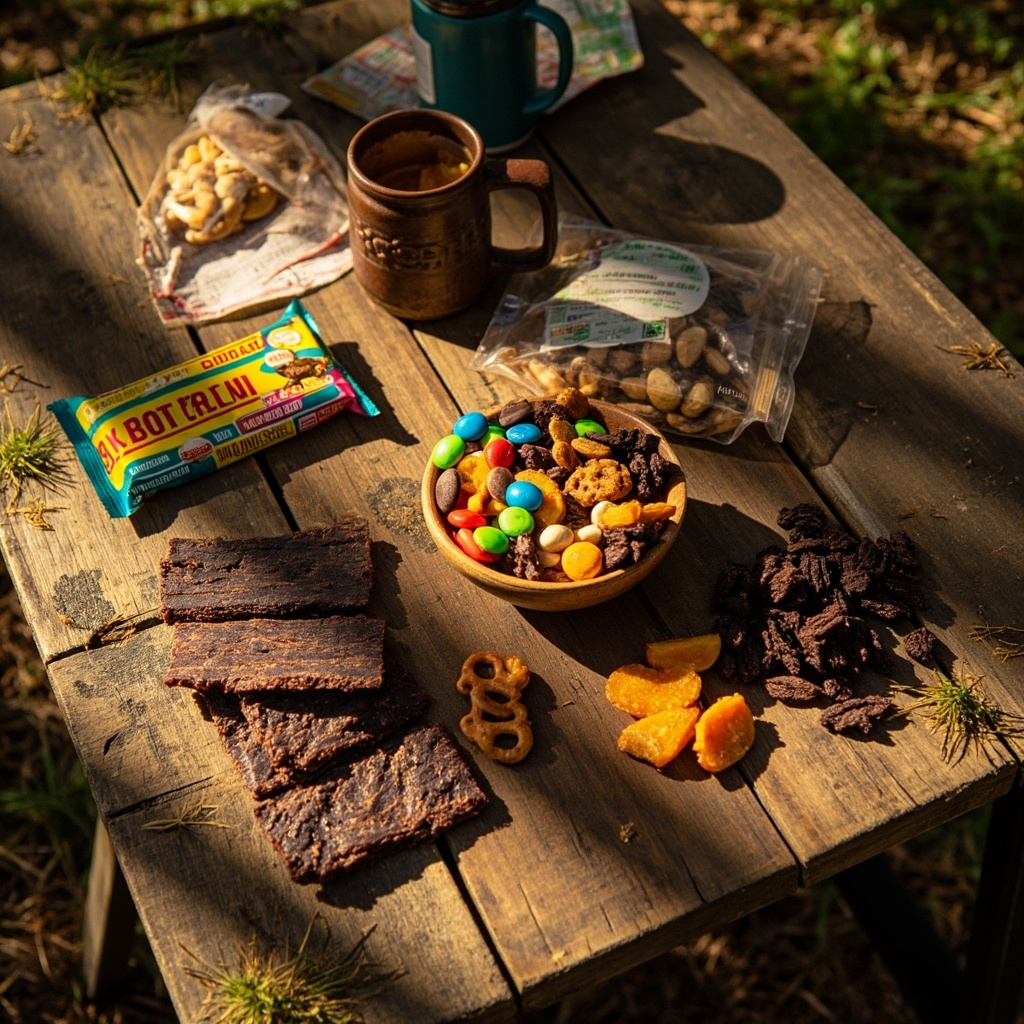
Building your own trail mix is 30–50% cheaper than buying pre-made and lets you control the ingredient ratio. A basic formula: 2 parts nuts (peanuts, almonds, cashews), 1 part dried fruit (raisins, cranberries, banana chips), 1 part chocolate or sweet add-in (M&Ms, yogurt chips), and optionally 1 part seeds (pumpkin, sunflower) or coconut flakes.
The biggest DIY mistake is using chocolate chips instead of M&Ms. Regular chocolate melts at 85°F — which is exactly the temperature inside a dark backpack on a summer trail. M&Ms have a candy shell that prevents melting up to about 95°F. In desert conditions, even M&Ms can soften, so consider carob chips or yogurt-covered raisins as heat-proof alternatives.
Jerky and Meat Snacks
Jack Link’s Beef Jerky — Best Jerky for Camping
Jack Link’s Beef Jerky Teriyaki (40-pack, 0.625 oz each, ~$23) is the best camping jerky pick for one critical reason: every pack is individually sealed, lightweight, and provides 7g protein in a single-serve portion that you can eat while walking without stopping.
At 40 packs for roughly $23 ($0.57/pack), the per-unit cost is remarkably low for a meat snack. Each pack is roughly the size of a deck of cards and weighs under an ounce, so you can carry an entire day’s worth of jerky in one jacket pocket. The teriyaki flavor is popular across age groups and works well as both a standalone snack and a meal supplement when dinner is running late.
Why jerky is essential for camping: Beef jerky is one of the oldest survival foods for good reason. The dehydration process removes 70–80% of the meat’s weight while concentrating protein and nutrients. Jerky doesn’t require refrigeration, survives being crushed in a pack, and has a shelf life of 6–12 months. For backcountry trips where weight and food safety are both concerns, jerky is hard to beat.
A common camping mistake with jerky is buying large bags instead of individual packs. Once you open a 10 oz bag of jerky, it starts drying out and collecting trail dust. Individual packs are sealed fresh until you tear them open, and the portion control prevents overconsumption (jerky is high in sodium — eating 4 oz in one sitting means 2,000+ mg of sodium).
Crackers and Chips
Dot’s Homestyle Pretzels — Best Individually Packaged Snack
Dot’s Homestyle Pretzels Variety Pack (18-count, 1 oz bags, ~$10) are the most popular packaged pretzel on Amazon and they earned that reputation through flavor quality. The variety pack includes Original, Honey Mustard, and Parmesan Garlic — three distinct flavors that prevent snack boredom on multi-day trips.
At 1 oz per bag, each serving is substantial enough to satisfy midday hunger without being heavy. The individual bags are key for camping: no open bags getting stale, no greasy fingers reaching into a shared bowl, and no risk of spilling a large bag in your tent. Kids love them too, which makes these a rare camping snack that works for the whole family.
Salty snacks and hydration: One thing to be aware of — pretzels, chips, and crackers are high in sodium. In hot weather, some extra sodium helps replace electrolytes lost through sweat. But if you’re not drinking enough water, salty snacks can actually increase dehydration. A good rule of thumb: pair every salty snack with at least 8 oz of water.
For a crunchier alternative, Boulder Canyon Avocado Oil Potato Chips come in individual 1 oz bags and use avocado oil instead of processed seed oils. They’re more fragile than pretzels (crackers crumble in packs), so pack them near the top of your bag.
Dried Fruit and Sweet Snacks
Dried Mango, Apricots, and Cranberries
Dried fruit is the natural counterpart to nuts and jerky in any camping snack rotation. It provides quick-digesting carbohydrates that your body converts to energy faster than nuts or meat, making it ideal for eating 20–30 minutes before a steep climb or during the second half of a long hike.
For quality dried fruit, Nature’s Eats Mega Trail Mix combines dried fruit with nuts in a 32 oz resealable bag — a good all-in-one option when you don’t want to buy separate ingredients. If buying individual dried fruit, dried mango is a top pick because it’s chewy, sweet, and rich in vitamin C and vitamin A. One ounce of dried mango provides about 80 calories and 20g of carbohydrates with almost zero fat. Dried apricots are another strong choice — they’re high in potassium (helpful for preventing cramps during hiking) and iron. Cranberries add tartness that balances the sweetness of other trail snacks.
Buy in bulk, portion yourself: A 1 lb bag of dried mango costs about $12–15 online. Portioned into 1.5 oz zip-locks (about 120 calories each), you get roughly 10–11 snack servings per bag — around $1.20 per serving, significantly cheaper than individual packs from the grocery store.
Fruit Leather vs Fresh Fruit
Fruit leather (like Stretch Island or Peter Rabbit brands) is ultralight and doesn’t bruise, making it ideal for backpacking. It provides about 50–80 calories per strip and takes up almost no space. The downside: most commercial fruit leather has added sugar, and the portion sizes are small — you’d need 3–4 strips to match the energy of one energy bar.
Fresh fruit (apples, oranges, bananas) is heavier but more hydrating and satisfying. Apples are the most durable fresh fruit for camping — they survive pack compression and last 5–7 days without refrigeration. Oranges peel cleanly and provide both hydration and vitamin C. Bananas are convenient but bruise easily and attract insects once opened.
Recommendation: For car camping, bring fresh fruit. For backpacking, choose dried fruit or fruit leather. Never bring berries or stone fruit (peaches, plums) unless you plan to eat them on day one — they spoil within 24–48 hours in warm weather.
DIY Camping Snack Recipes
Homemade Granola Bars
Making your own granola bars costs roughly $0.40–$0.60 per bar versus $1.25–$1.50 for store-bought, and you control every ingredient. The basic formula: 2 cups rolled oats, 1 cup liquid binder (honey + peanut butter), 1 cup mix-ins (chocolate chips, dried fruit, seeds), pressed into a pan and refrigerated for 2 hours.
For camping-specific bars, add extra calorie density: use peanut butter as the binder (adds protein and healthy fats), stir in coconut oil for heat resistance, and include sunflower seeds for crunch. Cut bars into 2”×2” squares and wrap individually in parchment paper. They’ll keep for 5–7 days at room temperature and up to 2 weeks in a cooler.
Common mistake: Using regular chocolate chips. As mentioned in the trail mix section, chocolate melts at 85°F. For homemade bars that won’t survive in a hot car, substitute mini M&Ms, carob chips, or white chocolate chips (which have a higher melting point due to cocoa butter content).
Trail Mix Customization Guide
The best trail mix is one you’ll actually eat. Start with a base (2 cups) of your preferred nuts — peanuts for budget, almonds for protein, cashews for flavor — then add:
- Sweet layer (1 cup): raisins, dried cranberries, banana chips, or coconut flakes
- Crunch layer (½ cup): pretzel pieces, corn nuts, or toasted pumpkin seeds
- Treat layer (½ cup): M&Ms, yogurt-covered raisins, or dark chocolate chunks
- Optional boost (¼ cup): chia seeds, hemp hearts, or flax seeds for omega-3s
Mix everything in a large bowl, portion into zip-lock bags (¼ cup per bag is a good trail snack size), and label with the date. DIY trail mix keeps for 3–4 weeks in a cool, dry place. For camping, make a fresh batch 1–2 days before your trip for maximum freshness.
How to Pack Snacks for Camping
Bear-Proof Food Storage
All food, including snacks, must be stored in bear-proof containers or systems when camping in bear country. This includes wrappers, empty bags, and even the crumbs from your trail mix. Bears have an extraordinarily powerful sense of smell and can detect food from miles away.
The three main bear-proof storage methods are: bear canisters (hard plastic containers that bears can’t open, required in many national parks), bear hangs (food suspended 12+ feet off the ground between two trees), and campground bear lockers (metal boxes provided at many developed campgrounds). Snack-sized items are easy to store in all three systems because of their small size.
Critical mistake: leaving snack wrappers in your tent or car. Even empty wrappers retain food odors strong enough to attract bears. Use a dedicated trash bag, keep it sealed, and store it with your food — never in your sleeping area. For detailed food storage techniques, read our complete food storage guide.
Cooler vs Shelf-Stable Options
The decision between cooler snacks and shelf-stable snacks depends on your trip type. For car camping with access to ice, a cooler opens up cheese sticks, yogurt cups, deli meat rolls, and cut vegetables — all of which provide better nutrition and hydration than dry snacks.
For the cooler-less approach (backpacking, kayak camping, or minimalist car camping), your snack toolkit is: energy bars, jerky, nuts, dried fruit, crackers, and nut butter packets. This combination provides protein, carbs, fat, and variety with zero refrigeration.
Pro tip: If you’re bringing a cooler anyway for meals, freeze a few snack bars and cheese sticks the night before. Frozen bars act as additional ice packs inside the cooler during the first day, and they’ll thaw to perfect eating temperature by afternoon.
Portion Control and Meal Planning
The most common snack packing error is bringing too much of one thing and not enough variety. Instead of one large bag of trail mix and one box of granola bars, bring smaller quantities of 5–6 different snacks. Variety prevents appetite fatigue, which is the real enemy on multi-day camping trips.
For a weekend trip (2 nights), plan 6–8 snack servings per person per day. For a week-long trip, plan 4–6 servings per person per day (appetite tends to decrease after the first few days). Always pack 20% extra — running out of food on day 3 of a 4-day trip is miserable. Pack your camping packing list with snacks as a dedicated category, not an afterthought.
Frequently Asked Questions
What snacks don't need refrigeration while camping?
Energy bars, jerky, trail mix, nuts, dried fruit, pretzels, crackers, and beef sticks all keep for days at room temperature. Avoid dairy-based snacks like cheese or yogurt unless you have a cooler with ice. For a full guide on keeping food cold, see our [food storage guide](/guides/food-storage-camping/).
How much food should I bring per day of camping?
Plan roughly 2,500–3,000 calories per person per day for active camping. For snacks alone, budget 4–6 snack servings per person daily. On a 3-day car camping trip for two people, that means roughly 24–36 individual snack portions. Overpack by 20% to account for extra hunger from hiking and outdoor activity.
Are protein bars good for hiking?
Yes — protein bars are one of the best hiking snacks because they're lightweight, don't require refrigeration, and deliver sustained energy. Look for bars with 10–20g protein and whole-food ingredients. Bars with added sugar above 15g can cause an energy crash. [CLIF BAR Energy Bars](https://www.amazon.com/dp/B0DNTY55KM?tag=camplabx-20) offer 10–11g protein per bar with organic oats for steady energy release.
What is the best trail mix for backpacking?
The best trail mix balances nuts for protein and fat, dried fruit for quick carbs, and chocolate for morale. Pre-packaged options like [Nature's Garden Trail Mix](https://www.amazon.com/dp/B07D5BCH7D?tag=camplabx-20) work well, but DIY trail mix (peanuts, almonds, M&Ms, raisins, coconut flakes) is cheaper and customizable. For backpacking, choose resealable bags to save weight and reduce waste.
Can I bring beef jerky camping without a cooler?
Absolutely — beef jerky is shelf-stable for months and needs zero refrigeration. Individually packaged jerky like [Jack Link's Teriyaki](https://www.amazon.com/dp/B0GHDDW661?tag=camplabx-20) is ideal because each pack is single-serve and lightweight. Jerky provides 7–15g protein per serving and is one of the most calorie-dense non-cook options available for camping.