
How to Choose a Camping Pillow (2026 Guide)
Compare inflatable, foam, and hybrid camping pillows. Learn which type fits your sleep style and trip type for the best night outdoors.
Why Most Campers Sleep Terribly (and How to Fix It)
Most campers obsess over tents, sleeping bags, and sleeping pads — then crumple up a fleece jacket and call it a pillow. Or they drag their bed pillow from home, watch it absorb condensation all night, and stuff a damp loaf into their pack the next morning.
Your pillow is the smallest piece of your sleep system, but it has an outsized impact on sleep quality. The wrong pillow means neck stiffness, poor sleep, and a miserable next day on the trail. The right one — matched to how you actually camp and how you actually sleep — makes a surprising difference.
This guide breaks down how to choose a camping pillow — the three main types, the factors that actually matter, and how to match both your trip type and sleep style to the right choice.
The 3 Types of Camping Pillows
Every camping pillow on the market falls into one of three categories: inflatable, compressible foam, or hybrid. Each trades off differently between weight, comfort, and packability.
Inflatable Pillows
Inflatable pillows use an air bladder (usually TPU — thermoplastic polyurethane) covered by a fabric shell. You blow them up like a pool float, and the air pressure determines firmness.
Best for: Backpackers, bikepackers, ultralight hikers
| Pro | Con |
|---|---|
| Ultralight (2–4 oz) | Can feel like a balloon without good cover |
| Packs down to pocket size | Prone to punctures and leaks |
| Adjustable firmness | Must inflate/deflate each night |
| Quick drying | Firmness changes with altitude/temperature |
The biggest improvement in recent years is the fabric cover. Older inflatables had bare TPU bladders that felt like lying on a pool toy. Modern designs like the Sea to Summit Aeros Premium add a brushed polyester shell with a rubber grip dot pattern that keeps the pillow from sliding off your sleeping pad.
Who should buy one: If you backpack, hike, or travel light, this is your category. The weight savings alone justify the slightly less-than-home comfort.
Compressible Foam Pillows
Foam pillows use memory foam or synthetic fill packed inside a fabric shell. No air, no valves — just squeeze it into the included stuff sack and pull it out when you’re ready to sleep.
Best for: Car campers, basecamp, family camping
| Pro | Con |
|---|---|
| Closest feel to a home pillow | Heaviest option (8–15 oz) |
| Zero setup — pull it out and sleep | Largest packed size |
| No leak risk | Retains odors on multi-day trips |
| Quietest option | Foam degrades over years of compression |
The TETON Sports Camp Pillow is a favorite among car campers because it compresses into an integrated stuff sack and feels genuinely similar to a bedroom pillow. The Vaverto Memory Foam takes this further with a medium-firm feel that works for both back and stomach sleepers.
Who should buy one: If you drive to your campsite and weight doesn’t matter, foam pillows deliver the most comfortable sleep with zero hassle.
Hybrid Pillows
Hybrid pillows combine a foam core with an inflatable air bladder. The foam provides cushion and softness while the air bladder adds adjustable loft and reduces packed size.
Best for: Versatile campers, side sleepers, anyone who wants comfort without the weight
| Pro | Con |
|---|---|
| Best comfort-to-weight balance | Most expensive option |
| Adjustable loft + soft feel | Two potential failure points (air + foam) |
| More comfortable than pure inflatables | Slightly heavier than pure inflatables |
The ALPS Mountaineering Versa and NEMO Fillo Wide represent the best of this category. The NEMO in particular is a standout for side sleepers thanks to its wider design and premium materials — though it comes at a premium price point.
Who should buy one: If you switch between backpacking and car camping, or if you’re a side sleeper who finds inflatables too firm, hybrids are worth the extra cost.

How to Choose by Trip Type
Matching your pillow to how you camp matters more than brand or price. Here’s how to decide based on your actual trips.
Backpacking
Priority ranking: Weight → Packed size → Comfort
When every ounce in your pack matters, an inflatable pillow is the clear winner. At 2–4 oz, you won’t even notice it. The Sea to Summit Aeros Premium is one of the lightest options available and a go-to for thru-hikers. Budget-conscious backpackers should look at the Hikenture Ultralight, which weighs just 3 oz and is very affordable.
Car Camping
Priority ranking: Comfort → Weight → Packed size
Since you’re not carrying your gear on your back, comfort wins. A compressible foam pillow like the TETON Sports Camp Pillow or Vaverto Memory Foam will give you the closest thing to your bed at home. The Therm-a-Rest Compressible Cinch is another excellent option with three size choices — small, medium, and large — making it easy to find the right fit for kids through adults.
Bikepacking and Kayak Camping
Priority ranking: Packed size → Weight → Comfort
Every cubic inch of space matters when you’re packing panniers or kayak hatches. Inflatables and compact hybrids win here. The ALPS Mountaineering Versa compresses smaller than most pure foam pillows while offering better comfort than a bare inflatable.
6 Key Factors That Actually Matter
Most product descriptions emphasize features that don’t matter much in the field. These six factors are what actually affect your sleep.
Weight and Packed Size
For reference, a deck of cards weighs about 3 oz. A bread loaf is roughly 4 × 5 × 12 inches. Those are your benchmarks.
- Ultralight goal: Under 4 oz, packs to deck-of-cards size
- Acceptable for car camping: 8–15 oz, bread-loaf packed size
- Dealbreaker: Anything over 16 oz for backpacking
Comfort and Loft
Loft is the pillow height when it’s fully expanded — measured from the sleeping surface to the top of the pillow. Different sleep positions need different loft:
- Side sleepers: 4–5 inches (your shoulder creates a gap between your head and the pad)
- Back sleepers: 3–4 inches (less gap to fill)
- Stomach sleepers: 2–3 inches (too much loft cranks your neck backward)
One thing to check: does the pillow maintain its loft all night? Pure inflatables can lose air slowly through the valve, dropping loft by morning. Hybrids and foam pillows hold their shape better.
Materials and Durability
- Shell fabric: Brushed polyester is the sweet spot — soft against skin, reasonably durable, and dries fast. Microfiber is softer but less breathable.
- Air bladder: TPU (thermoplastic polyurethane) is the standard. It’s flexible, puncture-resistant, and won’t degrade with UV exposure.
- Foam fill: Memory foam molds to your head shape but is heavier. Synthetic fill (polyester) is lighter but less supportive.
Ease of Use
Some pillows require 15–20 breaths to fully inflate. Others include a stuff sack that doubles as a pump (you press the sack to force air in). A few — like the NEMO Fillo — have a one-way valve that makes inflation faster.
Consider how much patience you’ll have at 10 PM after a 15-mile day.
Washability
Camping pillows get sweaty. Night after night of head contact means body oils, sunscreen, and dirt accumulate fast. A removable, machine-washable cover is a major advantage — you can toss it in the wash after each trip and start fresh. Inflatable bladders should be wiped down with a damp cloth only — never machine-washed, and never use harsh chemicals that could degrade the TPU material.
Check whether the cover zips off completely or is sewn shut on one end. Fully removable covers are much easier to wash and dry. If you camp more than a handful of nights per year, washability alone might justify paying more for a premium pillow.
Price Tiers
| Tier | Range | What You Get |
|---|---|---|
| Budget | Under $20 | Basic inflatables, simple foam pillows |
| Mid-range | $20–$35 | Quality inflatables with fabric covers, good foam pillows |
| Premium | $35–$50 | Hybrids, premium materials, best comfort-to-weight |
Don’t overspend. A budget inflatable works perfectly for occasional campers. The premium tier is for people who camp 20+ nights per year.
How to Choose by Sleep Style
Your sleep position matters more than you think. The wrong pillow for your sleep style leads to neck pain, poor sleep quality, and a rough morning on the trail.
Step 1: Identify Your Sleep Position
Side sleepers need high loft and wide surface area. Your shoulder creates a significant gap between your head and the sleeping pad. A thin pillow leaves your neck at an awkward angle all night.
Back sleepers need medium loft. Your spine is relatively aligned when lying on your back, so you need just enough height to support the natural curve of your neck.
Stomach sleepers need low loft and soft material. Any pillow that’s too tall forces your neck into backward rotation — a fast track to cervical pain. Thin inflatables or flat foam pillows work best. Some stomach sleepers even skip a pillow entirely and fold a fleece jacket instead.
Combination sleepers who shift between positions need an adjustable pillow. Inflatable and hybrid designs let you add or release air mid-night without fully sitting up. Foam pillows lock you into one loft level, so if you shift from back to side sleeping, you can’t compensate.
Step 2: Match to a Pillow Type
| Sleep Style | Best Pillow Type | Why |
|---|---|---|
| Side sleeper | Hybrid or thick foam | High loft + wide surface + soft feel |
| Back sleeper | Inflatable or medium foam | Adjustable firmness + medium loft |
| Stomach sleeper | Thin inflatable or flat foam | Low loft prevents neck strain |
The NEMO Fillo Wide is specifically designed with side sleepers in mind — its wider body prevents the pillow from collapsing when you shift your weight. Multiple campers report it’s the first camping pillow that let them sleep on their side without neck pain the next morning.
Step 3: Cross-Reference Your Trip Type
- Backpacking + Side Sleeper: This is the hardest combo. You need high loft (hybrid/foam) but low weight (inflatable). The ALPS Versa is the best compromise — hybrid design, under 11 oz, and adjustable loft to fine-tune for your shoulder gap.
- Car Camping + Stomach Sleeper: Easy. Use a thin foam pillow like the Vaverto. Weight doesn’t matter, so get the softest option.
- Backpacking + Back Sleeper: The sweet spot for inflatables. Adjustable firmness means you can dial in the perfect medium loft.
Learning how to choose a camping pillow is only part of your sleep system. See our guide to choosing a sleeping bag — the bag and pillow work together as a system.
How to Pack and Care for Your Camping Pillow
Packing Methods
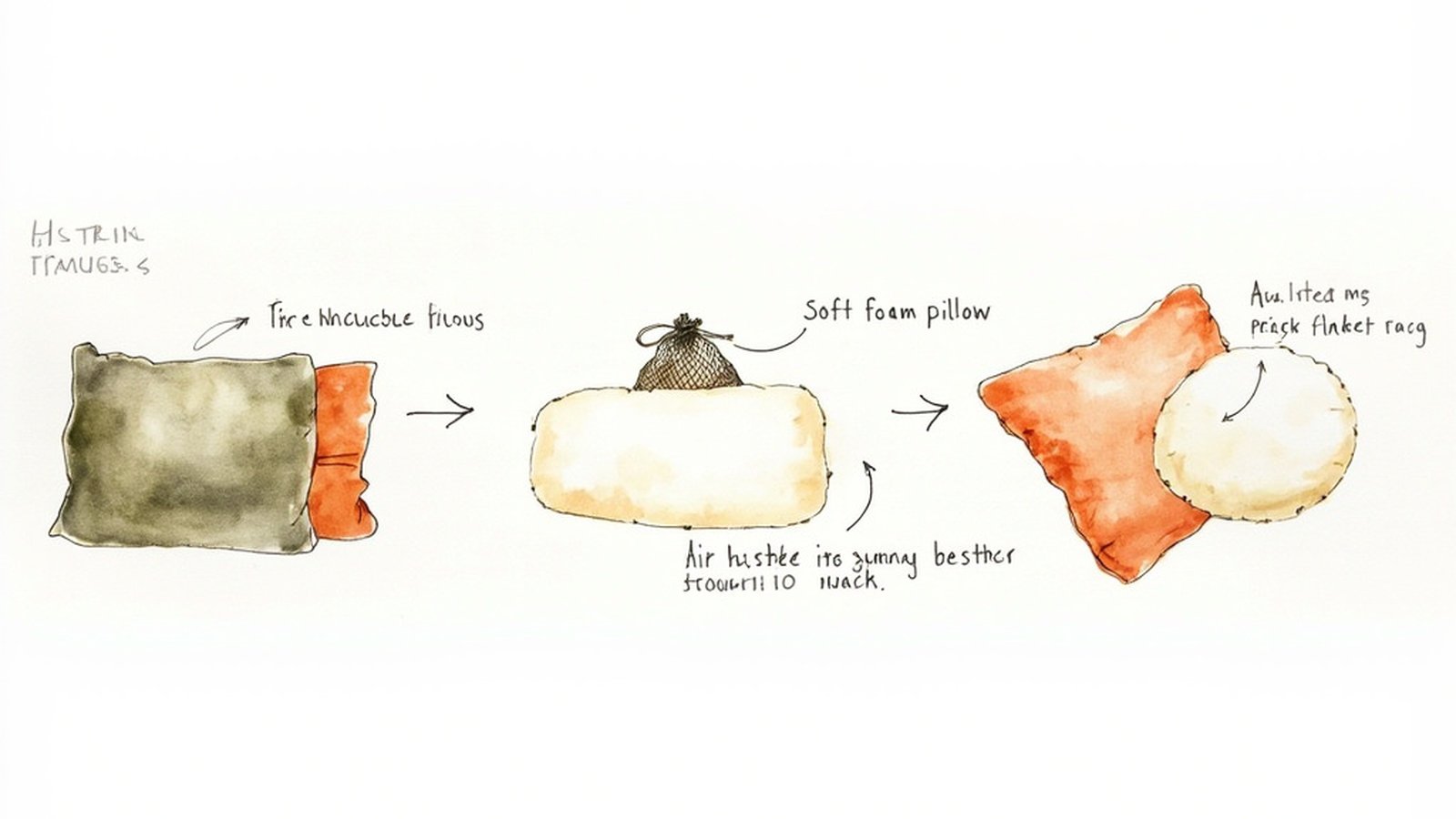
Inflatable pillows: Deflate completely, fold loosely (don’t roll tight — repeated tight rolling stresses the TPU), and stuff into the included sack. Store the sack in an accessible pocket — you’ll want your pillow first at camp.
Foam pillows: Use the included compression sack. Most foam pillows compress to about half their expanded size. Don’t over-compress — it damages the foam over time.
Hybrid pillows: Deflate the air bladder first, then compress the foam. Pack the deflated pillow loosely — the foam core provides enough structure that it doesn’t need tight compression.
Cleaning and Maintenance
- After each trip: Remove and wash the cover if removable. Wipe the bladder or foam core with a damp cloth. Let everything air dry completely before storage.
- Long-term storage: Store uncompressed. Foam that’s left compressed for months loses its ability to bounce back. Inflatable bladders should be stored partially inflated to prevent the TPU from sticking to itself.
- Common mistakes: Leaving a damp pillow stuffed in a sack (mildew), storing inflatables in a hot car (TPU degrades), and machine-washing air bladders.
When you’re organizing your camping packing list, a camping pillow should take up a tiny corner of your pack — not an entire compartment.
Our Top Camping Pillow Picks
We tested and compared seven camping pillows across all three types. Here are our recommendations organized by what matters most to different campers.
| # | Product | Key Feature | Best For |
|---|---|---|---|
| 1 | Sea to Summit Aeros Premium | 2.9 oz ultralight, brushed polyester cover | Ultralight backpacking |
| 2 | TETON Sports Camp Pillow | Integrated stuff sack, home-like feel | Car camping comfort |
| 3 | Hikenture Ultralight | Under $20, 3 oz, anti-slip dots | Budget backpacking |
| 4 | Vaverto Memory Foam | Removable washable cover, medium-firm | Stomach sleepers |
| 5 | ALPS Mountaineering Versa | Foam + air hybrid, adjustable | Versatile campers |
| 6 | NEMO Fillo Wide | Wide design, premium materials | Side sleepers |
| 7 | Therm-a-Rest Compressible Cinch | 3 size options, cinch closure | All-around use |
For Ultralight Backpackers
The Sea to Summit Aeros Premium has been the gold standard for years. At 2.9 oz, it disappears in your pack. The brushed polyester cover and rubber grip dots address the two biggest complaints about inflatables — the balloon feel and the sliding. The multifunction valve lets you release a tiny bit of air for micro-adjustments.
One honest caveat: The Large size is necessary for anyone with broader shoulders. The Regular can feel too narrow for side sleeping.
For Car Camping
The TETON Sports Camp Pillow is the closest thing to pulling your bedroom pillow out of a compression sack. The brushed microfiber cover feels soft, and the integrated stuff sack means you’ll never lose the storage bag. It’s very affordable and an easy decision for car campers.
One honest caveat: The cover can attract pet hair if you store it near other camping gear at home. Plan to wash it before your first trip if you have pets.
For Budget Campers
The Hikenture Ultralight punches well above its price. It’s one of the lightest options available at 3 oz, includes anti-slip dots, and is one of the most affordable choices. Reviewers consistently rate it as the best value for money in the inflatable category.
One honest caveat: The pillow height at full inflation may not provide enough loft for side sleepers. Back sleepers will be more comfortable with this one.
For Side Sleepers
The NEMO Fillo Wide is specifically designed with a wider body and scalloped bottom edge that cradles your shoulder. The premium materials feel noticeably better than cheaper alternatives — the foam-to-air ratio provides a supportive yet forgiving surface.
One honest caveat: The wide shape may not fit well inside narrow mummy sleeping bag hoods. If you use a tight mummy bag, consider the standard-width ALPS Versa instead.
For a deeper dive into specific pillow rankings, check out our best backpacking pillows review where we tested head-to-head over multiple trips.
A good pillow works alongside a quality camping air mattress — the two together make the biggest difference in overnight comfort. And if you’re a cold sleeper, proper neck support from the right pillow complements the warmth strategies in our stay warm in a tent guide.
Frequently Asked Questions
Can I just bring my regular pillow camping?
Yes for car camping — a home pillow fits fine in the trunk. For backpacking, a regular pillow takes up far too much pack space and absorbs moisture throughout the night. A dedicated camping pillow compresses to pocket size and handles campground conditions better.
How much should a camping pillow cost?
Budget inflatables start under $20 and work fine for occasional trips. Mid-range options in the $20–$35 range offer better materials and comfort. Premium hybrids and foam pillows run $35 to $50 but deliver noticeably better sleep quality for frequent campers.
Are inflatable camping pillows comfortable?
Modern inflatables with brushed fabric covers are much more comfortable than older bare-bladder designs. They’re still firmer than foam options. If you’re a side sleeper who needs soft loft, you may prefer a hybrid pillow instead.
What’s the lightest camping pillow available?
Ultralight inflatable pillows like the Sea to Summit Aeros Premium weigh just 2.9 oz and pack down to roughly the size of a deck of cards. Budget options like the Hikenture Ultralight are nearly as light at 3 oz.
Do I need a special pillow for sleeping in cold weather?
The pillow type matters less than your overall sleep system in cold weather. What matters is that your pillow doesn’t compress your sleeping bag’s insulation around your neck. A low-loft inflatable works well because it doesn’t loft up into the hood area, allowing your bag’s hood insulation to do its job.
The Bottom Line
For backpackers: Get an inflatable. The Sea to Summit Aeros Premium is the safest bet.
For car campers: Get a foam pillow. The TETON Sports Camp Pillow feels like home.
For side sleepers: Get a hybrid. The NEMO Fillo Wide fills the shoulder gap that thin inflatables can’t. Finding the right camping pillow for side sleepers makes the biggest difference in overnight comfort.
Best value: The Hikenture Ultralight is hard to beat for occasional backpackers.
The right camping pillow won’t transform a bad mattress pad into a good one — but paired with a decent sleeping setup, it’s the missing piece that turns an acceptable night into a genuinely good one.
The most important takeaway: match your pillow to how you actually camp and how you actually sleep. A backpacker with a thick foam pillow is wasting pack space. A car camper with a thin inflatable is sacrificing free comfort. Get the type right first, then worry about brand and price. That’s how to choose a camping pillow you’ll actually use trip after trip.
If you found this guide helpful, share it with your camping crew — and check out our other gear guides for more ways to upgrade your next trip.
Frequently Asked Questions
Can I just bring my regular pillow camping?
Yes for car camping — a home pillow fits in the trunk. For backpacking, a regular pillow takes up too much pack space and absorbs moisture. A dedicated camping pillow compresses down to pocket size.
How much should a camping pillow cost?
Budget inflatables start under $20 and work fine for occasional trips. Mid-range options ($20–35) offer better materials and comfort. Premium hybrids ($35–50) provide the best comfort-to-weight ratio.
Are inflatable camping pillows comfortable?
Modern inflatables with brushed polyester covers feel much better than the old balloon-like designs. They're still firmer than foam pillows. Side sleepers tend to prefer hybrid or foam options for more loft.
What's the lightest camping pillow available?
Ultralight inflatable pillows like the Sea to Summit Aeros Premium weigh just 2.9 oz and pack down to roughly the size of a deck of cards. They're ideal for backpackers counting every ounce.
Do I need a pillow for car camping?
Not strictly — you can bring a regular pillow from home. But a dedicated camping pillow saves trunk space, resists moisture better, and won't get ruined if it rains on your gear. Foam camping pillows are the closest to home comfort.