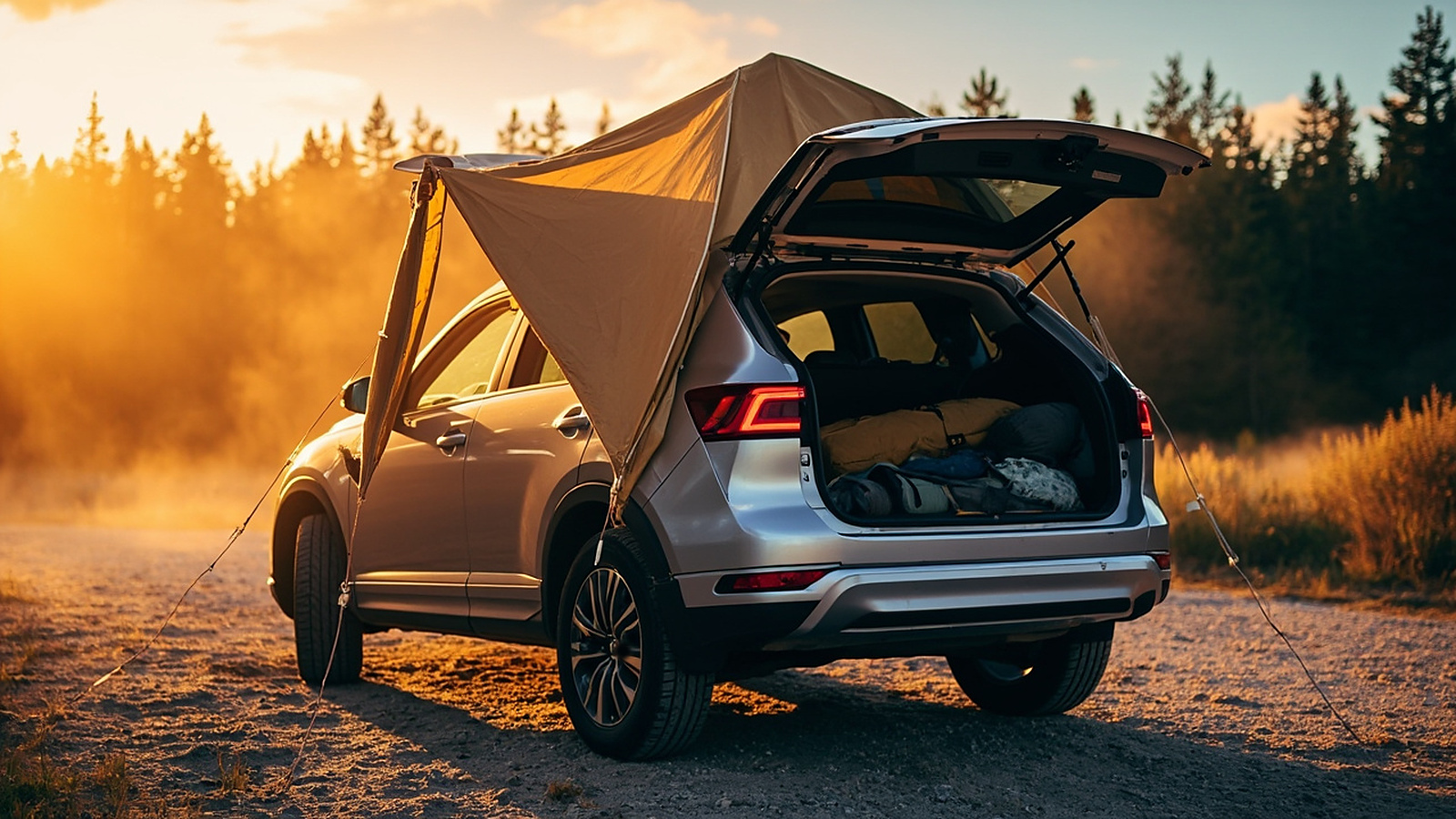
7 Best Tailgate Tents for SUV Hatchbacks (2026)
7 tailgate tents rated on hatch fit, setup speed and rain limits. Which ones seal an open SUV hatch, and which to skip before you buy.
Products Reviewed
A tailgate tent is a fabric shelter that straps to your open rear hatch and extends shade or living space off the back of the vehicle. Most of what sells under that name is actually a pop-up canopy or a truck-bed tent. Buy the wrong one and you spend an afternoon wrestling a metal frame onto gravel, or zipping fabric to a hatch that will not latch.
| # | Product | Key Feature | Best For |
|---|---|---|---|
| 1 | HASIKA 2-Person SUV Tailgate Tent | 210T coated fabric, 3,000 mm | Entry-tier shade, deepest owner history. Check Price → |
| 2 | Napier Sportz Cove | Over 2 ft of awning past the hatch | Named-brand shelter. Check Price → |
| 3 | JOYTUTUS SUV Tailgate Tent | 150D oxford, PU2000 | Second entry-tier awning. Check Price → |
| 4 | HREFEU 2-Person Hatchback | 210D, fits one person in minutes | Small hatchbacks. Check Price → |
| 5 | WildFinder Universal SUV Tent | 10 by 9 ft, 78 in tall | Walls plus standing height. Check Price → |
| 6 | Timber Ridge 5-9 Person | 6 by 8 ft screen porch | Families with a porch. Check Price → |
| 7 | Alvantor SUV Tent with Sunshade | 6 by 6 ft, tool-free pop-up | No-pole setup with an awning. Check Price → |
Skip this whole category if you need a room you can stand upright in during a storm, because that job belongs to a rooftop tent. Skip it too if you plan to walk away from the vehicle, since every shelter here is only as good as the straps holding it to your car.
Quick Answer: Best Tailgate Tent Picks for 2026
- Best value that seals a hatch: HASIKA 2-Person SUV Tailgate Tent. Silver-coated 210T polyester, a 3,000 mm rain rating, and the deepest owner history of anything we ranked.
- Best named-brand buy: Napier Sportz Cove. It pushes more than two feet past the hatch and comes in two sizes, which matters when your opening is wide.
- Best second entry-tier option: JOYTUTUS SUV Tailgate Tent. A roof cover plus an awning for buyers who shade the cabin, not just the tailgate.
- Best for a small hatchback: HREFEU 2-Person. Packs small and goes up in two steps, but poles are sold separately.
- Best with real walls: WildFinder Universal SUV Tent. Ten by nine feet with a 78-inch peak, and it unzips from the car to stand alone.
- Best family porch: Timber Ridge 5-9 Person. A screened six-by-eight porch keeps boots and coolers out of the sleeping area.
- Best pop-up with a sun awning: Alvantor SUV Tent. No poles and no tools, at the cost of the heaviest pack-down in the group.
Skip the Napier if your model has a hatch sensor that stays awake while the hatch is up, because owners report the car warnings never clear. Rule out any pop-up room if you have to stow it in a small closet between trips, since the folding sequence is the single worst-rated part of the category.
7 Tailgate Tents, Ranked by Hatch Fit
Four things set the order, and they matter in this sequence: how tightly the shelter seals to the hatch opening, how much usable area it adds, how the fabric and frame hold up over repeated setup, and how much owner history sits behind the listing. We did not field-test these tents ourselves. Every specification, rating, and stock note below comes from Amazon listing text and a live buy box captured on 2026-10-07 for shipping to New York 10001.
1. HASIKA 2-Person SUV Tailgate Tent — best value, deepest owner history
This is the tent most first-time buyers end up with, and the reason is the sleeve-and-strap system. The elastic sleeve wraps the hatch opening and the straps tie to the rear wheels or bumper, which covers far more vehicles than a rigid frame does. Specs worth knowing: silver-coated 210T polyester, a listed 3,000 mm rain rating, and 98 percent sun blocking. The shade area runs past 110 square feet, and the listed weight is near three and a half pounds.
Owners report it fits far wider than the “2-person” name suggests. One reviewer wrote that it “fit our HONDA HRV very well. Kept the bugs out and provided some privacy,” and another used it on a 1990s BMW hatchback and a 2010s Subaru hatchback with an easy setup and teardown.
The negative reviews concentrate on two things. Several owners describe the zippers and stitching as below outdoor grade and call the material thin. One owner on a Hyundai Kona wrote that it “blew off during the night when the wind came up,” because the lower edge had no solid anchor. A Subaru Forester owner also reported the hatch would not open fully with the sleeve attached.
Pass on it if you leave the tent standing overnight in wind, since the skirt has no ground anchor. Look elsewhere if your hatch has to clear a roof rack or rear wiper to open, because several owners hit that limit.
2. Napier Sportz Cove — the named-brand option
Napier is the only established outdoor brand in this group, and that matters more than it sounds. The Sportz Cove extends more than two feet of awning past the hatch and sets up with a single pole. It also ships in two sizes, so you can match the opening instead of stretching one universal sleeve. One large mesh window in the door carries a built-in storm flap.
Fit reports are unusually specific. A 2022 Volvo V90 owner wrote that the smaller size fits and is “snug, which is good. If the hatch was an inch wider it would have needed a Mid to Full.” A Ford Expedition owner used it across the country and praised the extra room and zipped screen door.
The complaints are mostly about vehicle-specific interference. An owner with a 2025 Subaru Outback wrote that the tail lights were too fat and the corner ripped against them. An owner with a 2026 Honda CR-V reported the tailgate lights never turn off. One owner without a roof rack tore the fabric on the first strap pull.
Skip it if your model has oversized tail lights or a hatch sensor that stays active, because both show up in the negative reviews. Pass on it if you have no roof rack and no good front anchor point, since the strap routing depends on one.
3. JOYTUTUS SUV Tailgate Tent — the budget runner-up
The JOYTUTUS covers a different use case than the HASIKA. It throws a roof cover forward over the cabin and an awning out the back, so the shaded area wraps the whole vehicle instead of only the tailgate. Specs: 150D polyester oxford with a PU2000 coating, a listed eight-minute install, and a packed size of about 17 by 8 by 8 inches. The kit includes two steel poles, two ground stakes, and two guylines.
A 2016 Honda CR-V owner wrote that it is “easy to install once you watch a video or two to get the finer points. One person can definitely do it.” Another buyer, using it at festivals on a 2026 Tucson, said the roof tarp reflected enough sun to make a noticeable difference inside the car.
Honest problems: a Subaru Crosstrek owner said first-time setup took nearly an hour and called it the hardest tent they had ever assembled. Other owners describe the stakes as too flimsy to hold the frame. One reviewer returned it after rain filled the interior and ruined everything stored inside.
Rule it out if you plan to camp through real rain, since owners report water pooling inside without an extra tarp. Not for you if you are setting up alone on the first trip, because most of the complaints trace back to a two-person job.
4. HREFEU 2-Person Hatchback Tent — sized for the smallest openings
This one is built for hatchbacks rather than full-size SUVs, and the smaller footprint is the entire point. It uses tear-resistant 210D polyester with a silver coating and a PU2000 finish, and it goes up in two steps. The listing claims one person can set it in about four minutes once familiar. The bag holds the tent, two stakes, four guylines, and a guide, but no poles.
A long-term owner who used it for a full week at the Sturgis rally wrote that “the screen is a little thin, but other than that, it served me well,” and noted being six foot three. Another buyer called it far better than a first SUV tent and praised how flat it packs.
We can’t verify owner reports on build quality for this one, so treat durability as unknown rather than proven. What the listing does tell you: the bag holds the tent, two stakes, four guylines, and a guide — but no poles. Check that before you order, because a two-person frame is not in the box.
Skip it if you want a self-contained kit, because you have to buy poles separately. Look elsewhere if your car has rear-hinged side doors or a spare tire on the tailgate, both of which the listing explicitly excludes.
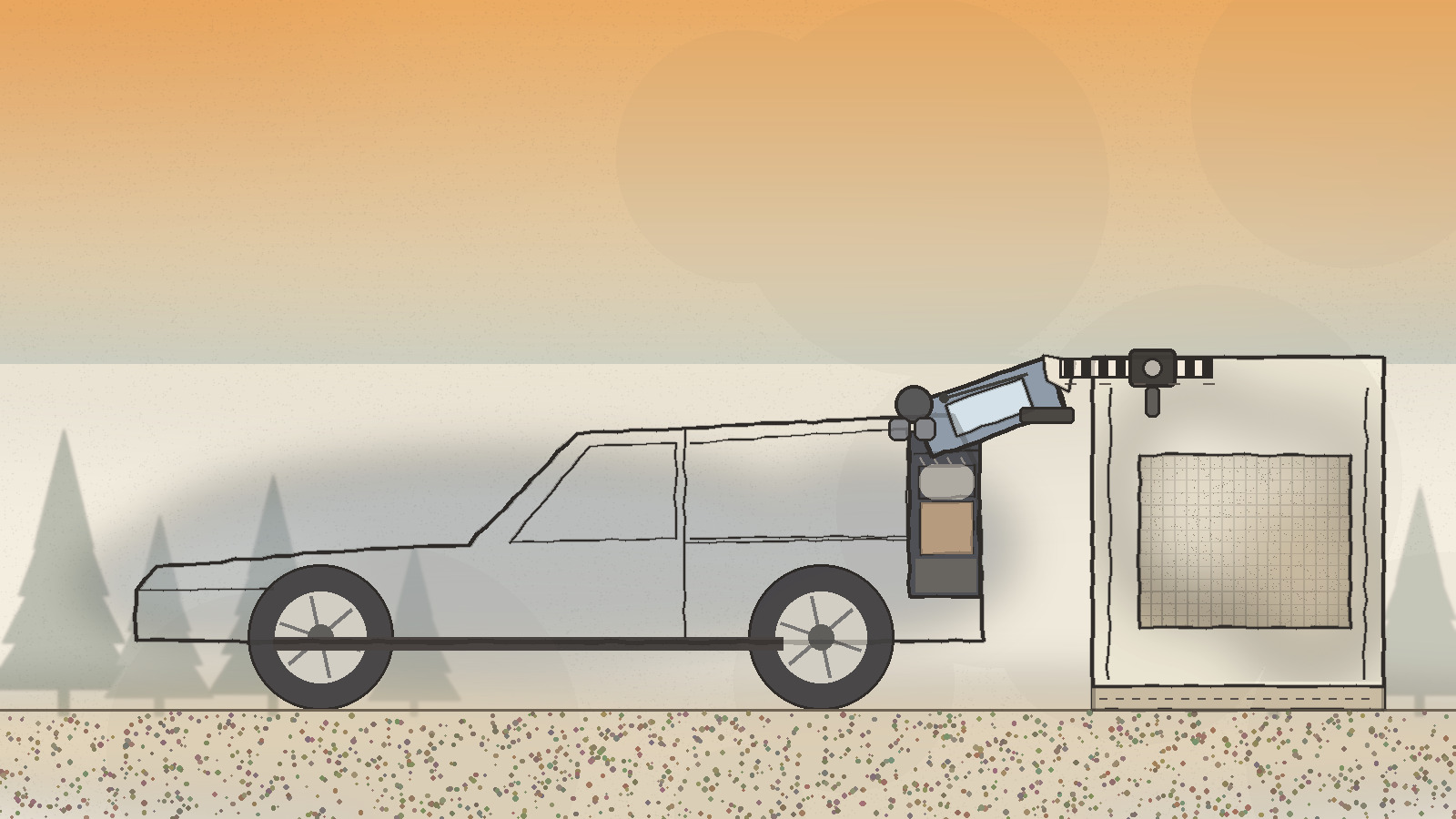
5. WildFinder Universal SUV Tailgate Tent — actual walls and standing height
Most shelters in this category sell shade. The WildFinder sells a room: ten by nine feet with a 78-inch center height, 190T polyester taffeta with a PU3000 coating, and a listed capacity of five or six adults. It also unzips from the vehicle side, so you can stand it alone as a regular camping shelter.
Owners report everything from a one-night setup to a full sleep. A Tesla Model Y owner put a queen air mattress inside alongside the gear and said the material holds its shape well. A 2021 Sienna owner confirmed it works on a minivan too. The caveat there is that you have to cut power to the tailgate, or the sensor drains the battery.
Seam sealing is the one thing that would decide this for you on wet ground, and we can’t verify how it holds over time. Plan on a second pair of hands for assembly — a 10 by 9 foot frame doesn’t pitch one-handed.
Rule it out if you are pitching on wet ground, because seam performance is the open question. Not for you if you are a solo camper, since a 10 by 9 foot frame is a two-person pitch.
6. Timber Ridge 5-9 Person — the screened porch pick
The Timber Ridge is the largest shelter here: thirteen by ten feet with an 87-inch center height, listed for up to five campers. What separates it from the rest is the six-by-eight screened porch and awning, which gives boots, coolers, and chairs a separate home instead of a pile in the sleeping area. Fabric is PU2000 polyester with double doors and mesh windows.
An owner hooking it to a Suburban wrote that it was “like have a 20 foot camper.” Another reviewer took it into a muddy field, rode out high wind and 4.5 inches of rain over eight hours, and reported it held with a tarp underneath.
The negative reviews are about wind and assembly. One owner woke up to a snapped pole and a hole after the first night of wind. Several others describe the instructions as poor and say the assembled shape does not match the product photos. A buyer also had to buy an extra large duffel because the packed volume does not fit a normal storage bag.
Pass on it if you camp in exposed, windy sites, because the pole failures in the reviews start with wind. Look elsewhere if storage space is tight, since the packed bundle is bulky.
7. Alvantor SUV Tent with Sunshade — the no-pole pop-up
The Alvantor arrives as a folded frame with no poles, no separate tent body, and no tools, so setup is a matter of unfolding and expanding. The interior measures six by six by six and a half feet with standing height, walls are UPF 50+ Oxford with PVC waterproofing, and a built-in extended awning adds shade. A removable floor mat is included.
Owners like the one-person setup. One buyer set it up alone on an Outback during a windstorm, lost the magnets, and held the roof down with a weighted blanket while the rest stayed staked. Another used it for two or three nights at a stretch and reported it did exactly what a four-in-one pop-up should.
The negatives are about materials and pack-down. Owners warn that the fabric and mesh tear easily and that zipper stitching was coming apart after a single use. Several describe folding it back into the bag as a genuine struggle. One buyer returned it because the large windows have no privacy covers.
Skip it if you want a private changing room, because the uncovered windows rule it out. Rule it out if the pack-down size bothers you, since multiple owners call the fold the worst part.
Quick reference: what each shelter does well, and what rules it out
Two published testing conventions explain the numbers above. The millimetre water-resistance figures, including the 3,000 mm rating and the PU2000 coatings, are hydrostatic head measurements under ISO 811, and the UPF 50+ figure follows the ultraviolet protection scale in AATCC TM183. That is why the millimetre numbers are comparable across these seven listings, and why none of them should be read as storm coverage.
✅ Fits hatch openings a rigid frame cannot reach, because the sleeve-and-strap system flexes to the opening — HASIKA ✅ Ships in two sizes instead of one universal sleeve — Napier Sportz Cove ✅ Shades the whole vehicle rather than only the tailgate — JOYTUTUS ✅ Packs flat enough for a small hatchback bag — HREFEU, provided you source the poles separately ✅ Gives a 78-inch peak and full walls instead of a mesh floor — WildFinder ✅ Puts a screened six-by-eight porch between your boots and your sleeping area — Timber Ridge ✅ Sets up alone with no poles and no tools — Alvantor ✅ Pushes more than two feet of awning past the hatch — Napier Sportz Cove
❌ Leaving one standing overnight in wind, since the skirt has no ground anchor — HASIKA ❌ Camping through sustained rain, since a shower rating is not a storm rating — every shelter here ❌ Pitching on wet ground, where seam leaks show up after a few nights — WildFinder ❌ Camping on exposed, windy sites, where the reported failures start with a snapped pole — Timber Ridge ❌ Stowing it in a small closet between trips, given the fold is the worst-rated step — Alvantor
Which of These Is Not a Canopy?
A hatch-seal tailgate tent hangs off an open tailgate and extends along the body of the vehicle. Close the hatch and the shelter collapses, because the hatch is a load-bearing wall. The hatch does the structural work that a canopy gets from four legs, and everything ranked below is that kind of shelter.
A freestanding tailgate canopy stands on four legs with the tailgate used as a back wall. Close the hatch and the structure stays up, and any canopy pushed out over the vehicle roof has to be moved before you drive. If you want that behavior, read the 10×10 canopy guide or the outdoor canopies roundup instead.
A pickup-bed tent straps to the rails of an open truck bed and has nothing to do with a hatchback. Those are covered separately in our truck-bed tent guide.
One test settles it. Close the tailgate. If the shelter still stands, you have a canopy. If it folds, you have the real thing.
Which One Fits Your Vehicle?
Fit is decided by the shape of your opening, not by the vehicle’s badge. Use this as a shortlist, then confirm with the three measurements in the next section.
| Vehicle type | Hatch shape to expect | What to shortlist | What to avoid |
|---|---|---|---|
| Midsize and full-size SUV | Wide opening, hatch lifts high | Enclosed or porch rooms such as the Timber Ridge or WildFinder | Over-wide pop-up canopies that leak light around every seam |
| Compact SUV and CUV | Narrower opening, often with a support strut | Small hatch awnings such as the HASIKA or JOYTUTUS | Five-to-nine-person rooms that physically will not slide over the opening |
| Hatchback and wagon | Shortest opening of the group | Two-person awnings such as the HREFEU or HASIKA | Anything marketed as a universal SUV room |
| Jeep and body-on-frame | Hatch opens but side clearance is tight | Mid-size awnings with sleeve attachment | Any shelter needing full standing height and a square footprint |
Owners keep reporting the same two fit failures, both size problems rather than quality problems. Straps get tensioned against oversized tail lights and tear a corner. And sleeves that look universal stop short of letting the hatch open fully on vehicles with roof racks or rear wipers. Check that second one before ordering anything, because a hatch that only opens three quarters of the way defeats the whole product.
If you are still deciding on the vehicle rather than the tent, our car camping setup guide covers sleep arrangements and power first.
Measure These Three Numbers Before Ordering
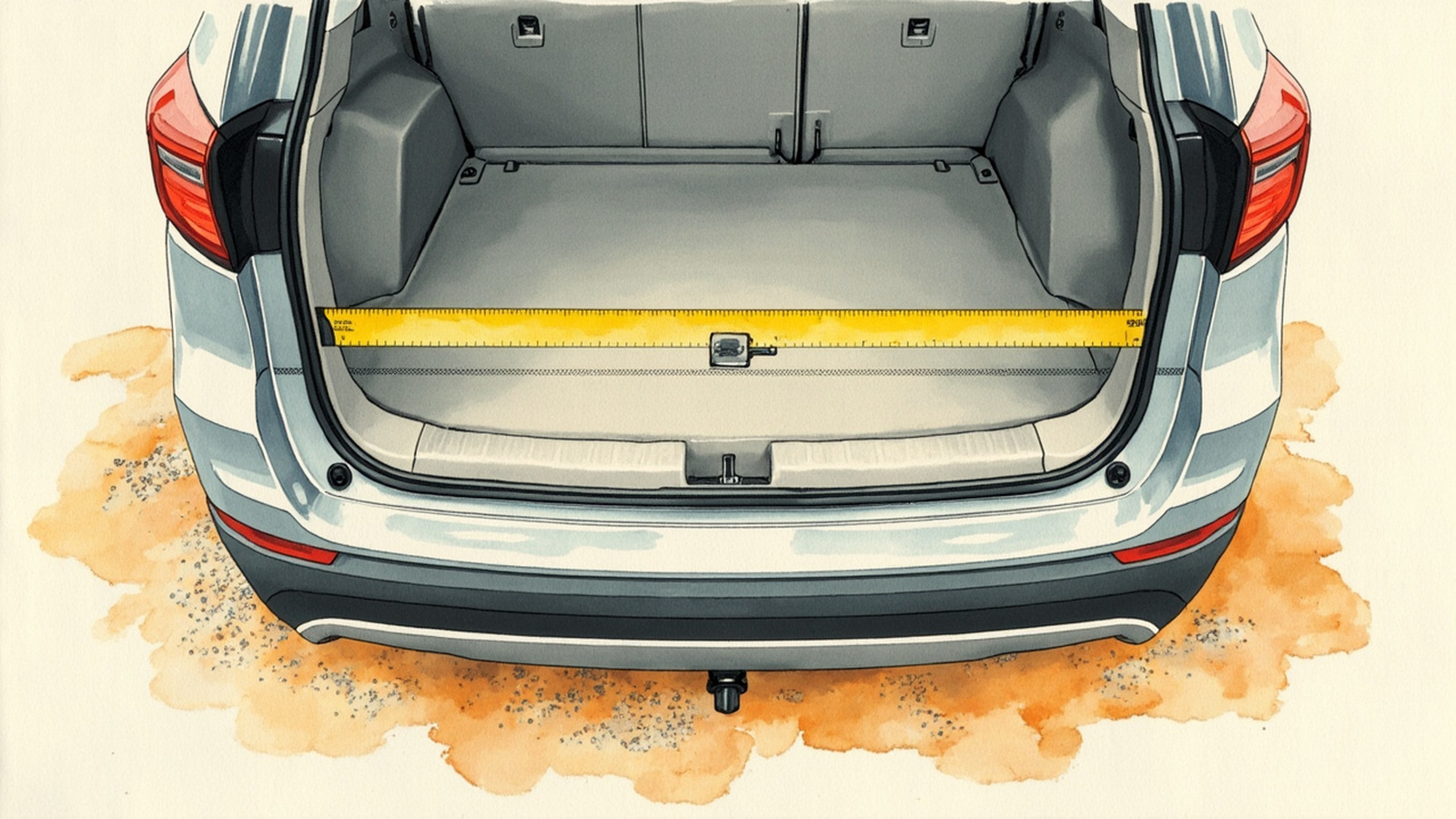
All three measurements take about five minutes with a tape measure, in a parking lot, and they prevent nearly every complaint in the reviews.
Measure the clampable hatch lip width. Open the hatch and measure the inner width of the opening between the taillight housings where the sleeve or clamp sits. This number decides which of the two sizes you order. Subtract an inch to be safe, because a snug fit that strains a strap is what tears corners.
Check the vertical clearance under the open hatch. Look at how high the lower edge of the open hatch sits off the ground. If that edge hangs lower than the tent’s skirt, the skirt drags on dirt and holds puddles, and the hem collects every stone on the site.
Locate the anchor points before the tent arrives. Confirm that the rear bumper, wheel arches, and any roof rack can take a strap without rubbing paint. Also check that the strap does not block the hatch from opening fully. Test it by running the strap, pulling to tension, and checking whether the hatch still swings.
I’d skip the measurements entirely if a shop will let you fit the tent to your own car first. A two-minute parking lot test tells you more than any listing table.
Two wind habits matter more than any wind rating printed on a listing. First, tension every strap, because a slack lower edge acts like a sail. Several owners describe tents that blew away at night specifically because the bottom was loose. Second, treat gusts as the limit rather than sustained wind, since a gust hits the open side where the mesh is only holding bugs.
FAQ
Do tailgate tents fit any SUV?
Only within a range. Listings that say universal generally mean the sleeve clears a common mid-size opening, not that it clears everything. Measure the clampable lip on your own hatch before ordering, and keep in mind that a fit which strains the strap is the leading cause of torn corners in owner reports.
Is a tailgate tent the same as a tailgate canopy?
No, and the difference is structural rather than cosmetic. A hatch-seal shelter uses the raised hatch as a wall, so it folds when you close the hatch, while a canopy stands on its own legs and keeps its shape. Test it by closing the hatch: if the shelter stays upright, you have a canopy.
Can you use one in the rain?
Light rain is fine once every strap is connected. The coated fabrics in this group run from PU2000 up to a 3,000 mm rating, which handles drizzle and an unexpected shower but is not storm coverage. One owner reported the interior filling with water during sustained rain, and several others describe seam leaks after a handful of nights. Our camping in the rain guide covers the layering that keeps water outside a shelter.
Will it fit my hatchback car?
Usually yes, provided the hatch lifts near-vertical and the lip is wide enough to clamp. The common failures are side-hinged rear doors, a spare tire mounted on the tailgate, and sedans with short openings. Choose a two-person awning over any larger room for these vehicles.
How long does setup take?
Expect four to eight minutes once you know the sequence, and treat the first attempt as training rather than a time trial. The largest pop-up rooms are the exception: owners report close to an hour on first assembly because the frames arrive folded instead of assembled.
Do I need a separate canopy for the side?
Not for shade or bugs, since the open hatch already does that work. Add a canopy only when you want cooking or sitting space held clear of the fabric. Never run a stove, fire pit, or generator inside the shelter or under the open hatch: carbon monoxide is odorless, and a fuel-burning flame against PU-coated polyester is how a shelter fire starts.
Which One Should You Buy
Match the tier to the trip before you match the brand. Entry-tier sleeve awnings cover weekend shade and bug relief for two people, and they are the easiest to stow. Enclosed rooms and porches earn their bulk when you are actually sleeping beside the open hatch. Pop-ups with no poles earn their price when you set up alone or change vehicles often.
Then work down the list. Pick your vehicle group from the table above, measure the hatch lip, and drop the tents that need an opening wider than yours. Read the one-star and two-star reviews for the two or three finalists rather than the average rating. The failures here are specific to body shapes, and specific failures are exactly what a rounded-up average hides.
Two products come out ahead for most buyers, and the best tailgate tent for most hatches is one of these two. The HASIKA 2-Person SUV Tailgate Tent covers the widest range of hatch shapes for the least money. The Napier Sportz Cove is the pick if you want a known brand behind the fabric and a deeper awning.
Once the shelter is sorted, the next purchase is usually a surface for the ground inside it. Our camping tables roundup covers fold-flat options that fit the same bags, and the pop-up tent roundup is the better read if you change vehicles often.
Prices, ratings, and stock status for all seven were captured on 2026-10-07 for shipping to New York 10001. We did not field-test any of them ourselves, so fit and durability claims come from manufacturer specs and reported owner experience rather than our own measurements.