Camping with Dogs: The Complete Guide for 2026
Everything you need to know about camping with dogs — from finding pet-friendly campsites and essential gear to trail safety, first aid, and keepin.
Why Camp with Your Dog?
Camping with your dog transforms a good trip into a great one. Dogs are natural adventure partners — they hike enthusiastically, nap contentedly by the fire, and provide security at night. According to a 2025 KOA survey, 62% of campers bring their dogs, making it the most common camping companion.
The key to a successful dog camping trip is preparation. This guide covers everything from picking the right campsite to handling emergencies on the trail.
Finding Pet-Friendly Campsites
Not all campsites welcome dogs, and rules vary significantly:
| Campsite Type | Dog Policy | Notes |
|---|---|---|
| National Parks | ✅ Allowed in campgrounds, ❌ often restricted on trails | Check individual park rules; Yosemite allows leashed dogs on paved trails only |
| National Forests | ✅ Generally allowed | Most lenient option; dogs allowed on most trails |
| State Parks | ✅ Usually allowed | Rules vary by state; some beaches restrict dogs |
| KOA Campgrounds | ✅ Pet-friendly | Most locations charge $10-25/night pet fee |
| Private Campgrounds | Varies | Always call ahead; breed restrictions may apply |
| Backcountry | ⚠️ Rarely allowed | Most wilderness areas prohibit pets |
Pro tip: Use Hipcamp and Recreation.gov and filter by “Pets Allowed.” Read recent reviews — some sites say “pet-friendly” but have hidden restrictions like “dogs under 30 lbs only.”
Essential Dog Camping Gear
Must-Have Items
-
Leash and Tie-Out: A 6-foot nylon leash for walks + a 15-30 foot cable tie-out for camp. Many campgrounds require dogs to be leashed at all times.
-
Collapsible Bowls: Silicone fold-up bowls for food and water. Look for ones with carabiner clips.
-
Dog Food and Treats: Pack 25% more food than usual — camping burns extra energy. Bring high-value treats for trail training.
-
Dog Sleeping Pad: The Ruffwear Highlands Sleeping Pad ($69.99) is insulated and waterproof. Budget option: a foam sleeping pad from any pet store ($15-25).
-
Poop Bags: Bring a roll dispenser plus 50+ bags. Pack out all waste — it’s the law in most areas.
-
Dog First-Aid Kit: Include tick removal tool, paw bandages, antiseptic wipes, tweezers, and any medications your dog takes.
Nice-to-Have Items
- Dog Backpack: Ruffwear Approach Pack ($80) — lets your dog carry their own food and water on hikes
- LED Collar Light: Nite Ize SpotLit ($12) — see your dog at night, clip to any collar
- Dog Booties: Ruffwear Grip Trex ($65) — protect paws on hot sand, sharp rocks, and snow
- Portable Water Bottle: Highwave AutoDogMug ($16) — one-hand water dispensing on hikes
Trail Safety Tips
Before the Hike
- Check trail rules: Many trails prohibit dogs or require leashes. Violation fines range from $50-500.
- Assess your dog’s fitness: Start with 2-3 mile hikes and build up. Puppies under 12 months shouldn’t do long hikes — their joints are still developing.
- Pack enough water: Dogs need 0.5-1 oz of water per pound of body weight per hour of activity. A 50-lb dog hiking for 3 hours needs at least 75 oz (over 2 liters).
On the Trail
- Keep your dog on leash: Even if your dog has perfect recall, wildlife encounters, other dogs, and steep drops make off-leash hiking risky.
- Watch for hazards: Rattlesnakes, porcupines, cacti, and toxic plants (mushrooms, foxglove, oleander) can all injure dogs.
- Take frequent breaks: Dogs can’t tell you when they’re overheating. Stop every 30-45 minutes in shade. Offer water at every stop.
- Check paws regularly: Look for cuts, thorns, and burrs between toes. Booties aren’t just for winter — hot rocks and sand can burn paw pads above 120°F.
Wildlife Encounters
- Bears and mountain lions: Keep your dog close and calm. Do NOT let your dog chase wildlife — it’s illegal in most areas and dangerous. A dog chasing a bear can lead the bear back to your campsite.
- Snakes: If your dog gets bitten, carry them to the car and drive to the nearest vet immediately. Do NOT try to suck out venom or use a tourniquet.
- Ticks and fleas: Apply tick prevention medication before your trip. Check your dog thoroughly at the end of each day — focus on ears, armpits, and between toes.
Campsite Setup with Dogs
Creating a Safe Space
-
Set up a designated dog area: Place a ground stake with a tie-out cable in a shaded spot. Add a water bowl and their sleeping pad. This becomes “home base.”
-
Create a fire boundary: Establish a clear 6-foot no-go zone around the fire ring. Practice this at home before your trip.
-
Food storage: Store dog food in your car or a bear canister — not in your tent. Wildlife (raccoons, bears, jays) will find it.
-
Nighttime routine: Most dogs sleep better in the tent with you. Bring an old towel for them to lie on. If your dog is anxious, a Thundershirt or calming treats can help.
Managing Barking
Excessive barking is the #1 complaint from neighboring campers. Solutions:
- Exercise before quiet hours: A tired dog is a quiet dog. Hike or play fetch for 30+ minutes before evening.
- Bring a chew toy: A frozen Kong stuffed with peanut butter keeps dogs occupied for hours.
- White noise: A small battery fan provides white noise that masks triggering sounds (other dogs, wildlife).
- Training: Practice “quiet” command at home. Reward silence with treats.
Dog Camping Checklist
Documents and Health
- Vaccination records (some campgrounds require proof of rabies vaccine)
- Dog license tag
- ID tag with your cell phone number AND campsite info
- Microchip verification (make sure it’s registered with current contact info)
- Heartworm and flea/tick prevention (applied before the trip)
Gear
- 6-foot leash + 15-30 ft tie-out cable
- Collapsible food and water bowls
- Dog food (25% more than usual) + treats
- Dog sleeping pad or blanket
- Poop bags (50+)
- Dog first-aid kit
- Tick removal tool
- LED collar light
- Dog backpack (for day hikes)
- Dog booties (if terrain requires)
Safety
- Water (1 oz per lb per hour of hiking)
- Portable water bowl
- Dog-safe sunscreen (nose and belly, especially for short-haired breeds)
- Paw balm or Musher’s Secret
- Towels (dogs get wet — bring 2-3)
Best Dog Breeds for Camping
Any healthy, well-trained dog can enjoy camping, but some breeds are naturally suited:
| Breed | Why They’re Great | Considerations |
|---|---|---|
| Labrador Retriever | Loves water, hiking, and retrieving | Heavy shedder; needs lots of exercise |
| Australian Shepherd | Extremely athletic and obedient | Herding instinct may chase wildlife |
| German Shorthaired Pointer | Built for endurance in any terrain | High energy — needs 2+ hours of activity daily |
| Golden Retriever | Friendly, calm, great with families | Prone to hip issues on long hikes |
| Border Collie | Smartest breed, incredible stamina | Needs mental stimulation or gets destructive |
| Mixed Breed (Rescue) | Often healthier, grateful for adventure | Unknown history — test on short trips first |
Related gear reviews: 8 Best Camping Tents · 9 Best Camping Sleeping Pads
What If Your Dog Has Never Camped?
For more outdoor adventure tips, see our camping with kids guide and pet-friendly camping guide.
Start small. Set up your tent in the backyard for a night. Then try a 1-night car camping trip close to home. Most dogs adjust within 24-48 hours, but anxious dogs may need:
- A familiar blanket or bed from home
- Their favorite toys
- Adaptil (dog pheromone) spray on their sleeping pad
- Short, positive associations (treats for calm behavior near the tent)
The goal is to make camping fun for your dog. If they’re stressed, cut the trip short and try again in a few weeks. Every dog is different — some take to camping immediately, others need multiple trips to feel comfortable.
This guide contains affiliate links. If you purchase through these links, we may earn a small commission at no extra cost to you. This supports our ability to keep testing and writing honest reviews.
Frequently Asked Questions
Can I bring my dog to any campground?
No — always check ahead. Most state and national parks allow leashed dogs in campgrounds and on trails, but some restrict dogs from certain trails, swimming areas, or backcountry sites. Private campgrounds like KOA are generally dog-friendly but may charge a pet fee ($10-25/night). Hipcamp and Recreation.gov let you filter by pet-friendly sites.
What gear do I need for camping with my dog?
Essentials: a sturdy 6-foot leash, tie-out cable (15-30 ft), collapsible food/water bowls, dog food (plus extra), a dog sleeping pad or blanket, poop bags (bring 2x what you think you need), a dog first-aid kit, tick removal tool, and a dog ID tag with your campsite info. Nice-to-haves: a dog backpack, LED collar light, dog booties, and a portable water bowl with carabiner.
How do I keep my dog safe around the campfire?
Set a clear 3-foot boundary around the fire ring. Keep your dog leashed or tethered at least 6 feet away. Watch for hot coals that can get kicked out. Bring a dog-specific first-aid kit with burn cream and paw salve. Never leave your dog unattended near a fire — even well-trained dogs can get spooked by wildlife sounds and bolt toward flames.
Should I bring a dog tent or let my dog sleep with me?
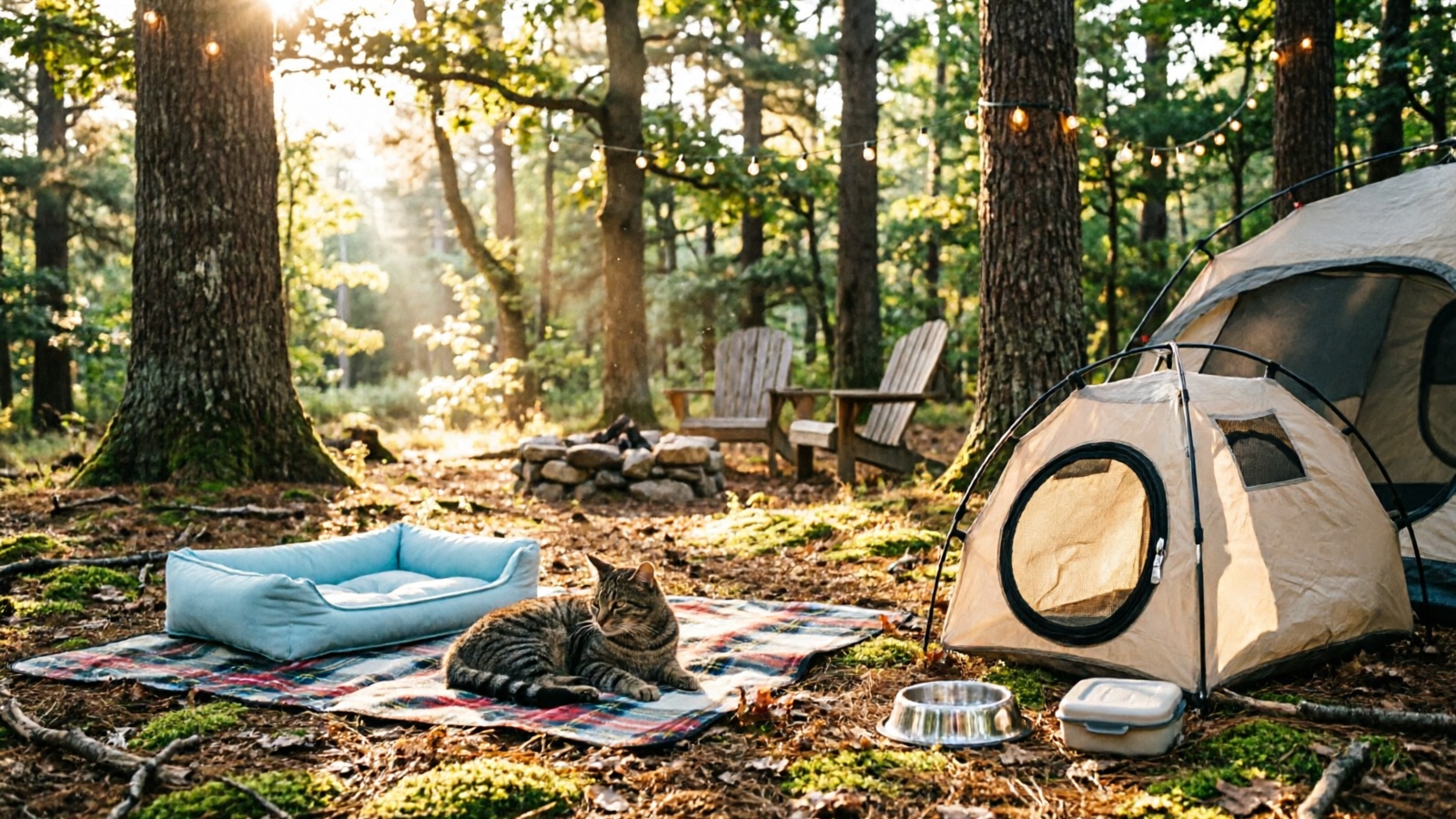
Most dogs prefer sleeping in the tent with their owners — it provides warmth, security, and bonding. Bring an old towel or dedicated dog sleeping pad to keep dirt off your sleeping bag. For summer camping, a mesh-panel tent with good ventilation helps. If your dog is a restless sleeper or you have a small tent, consider a dedicated dog tent or a crate with a rain fly.