How to Plan Camping Meals: Templates, Lists & Tips (2026)
Stop overpacking or running out of food. This camping meal plan guide covers templates, grocery lists, prep-ahead strategies, and a 3-day sample...
Bad meal planning ruins camping trips in two ways: you either pack your entire kitchen and haul 40 lbs of food you don’t eat, or you bring three hot dogs and a bag of chips for a 3-day trip. The difference between a great camping trip and a miserable one often comes down to what’s in the cooler — and a good camping meal plan is what puts the right food in there.
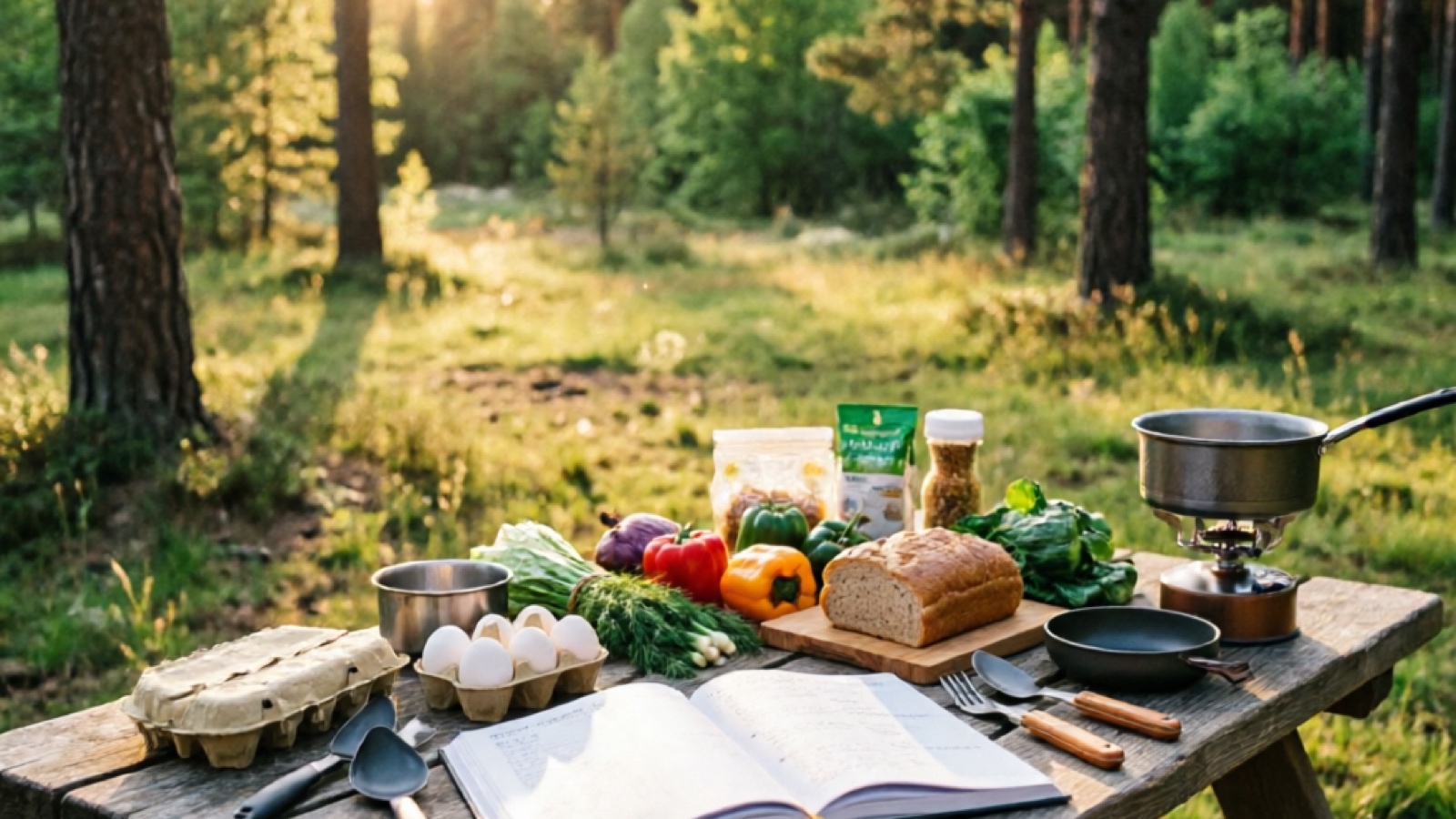
For recipe ideas to fill your plan, see our 21 easy camping meals guide. Here’s the system: choose meals → build a grocery list → prep at home → pack strategically → execute at camp.
The 5-Step Camping Meal Planning Method
Step 1: Know Your Constraints
Every camping meal plan starts with understanding what you’re working with:
- Trip length — 1 night vs. 3 days vs. a week changes everything. Perishables spoil, cooler ice melts, and appetite changes over longer trips.
- Cooking equipment — camp stove or fire only? One pot or full kitchen? No-cook options for lunch? Your camping meal plan must match what you can actually cook.
- Group size — multiply portions, but share staples (oil, salt, spices) to avoid duplicates and save weight.
- Cooler or no cooler — this single factor determines whether you can bring perishables at all. A no-cooler camping meal plan requires a completely different strategy.
- Water access — some meals need extra water for cooking and cleanup. Factor this into your camping meal plan.
Step 2: Map Meals by Day and Priority
This is where your camping meal plan takes shape:
- Eat perishables first. Day 1 = fresh meat, eggs, dairy. Day 3+ = canned, dried, frozen pre-cooked. This is the golden rule of every camping meal plan.
- Plan every meal: breakfast, lunch, dinner, and snacks. Leaving gaps means you’ll overpack or underpack.
- Assign one “hero meal” per day — the meal you’re most excited about. Build the rest around simple, low-effort options. A good camping meal plan has 1 ambitious meal per day and 3 easy ones.
- Plan 1–2 backup meals that need zero cooking (wraps, trail mix, canned chili). Bad weather or exhaustion kills ambitious cooking plans — your camping meal plan should account for this.
Step 3: Build Your Camping Meal Plan Grocery List
- Write down every ingredient for every planned meal — then cross-check for duplicates
- Group by store section: produce, meat, dairy, pantry, frozen — prevents wandering the aisles
- Check your pantry first — you probably already have oil, salt, spices, and condiments
- Buy exactly what your camping meal plan calls for plus one backup — not “let’s grab extra just in case” (that’s how you end up with 12 eggs for a 2-day trip)
Step 4: Prep at Home (The 80/20 Rule)
The camping meal plan secret: do 80% of the work at home, 20% at camp:
- Pre-chop all vegetables — store in labeled ziplock bags, saves 30 minutes of camp prep
- Pre-cook hard ingredients (rice, pasta, potatoes, bacon) — reheat at camp in 5 minutes
- Pre-mix dry ingredients (pancake mix, spice blends, marinade powders) in sealed containers
- Marinate proteins in ziplock bags — freeze them, they’ll thaw in the cooler over 2 days and act as extra ice
- Pre-assemble foil packets — wrap tight, label, refrigerate, toss on coals at camp
Step 5: Pack Strategically
A camping meal plan is only as good as your packing system:
- Pack by day (Day 1 bag, Day 2 bag, Day 3 bag) — eliminates decision fatigue at camp
- Layer cooler: raw meat on bottom (coldest), drinks on top (most accessed), dairy in middle
- Pack non-cooler items separately: dry goods, snacks, cooking tools, cleanup supplies
- Bring a separate “first meal” bag — the food for your first night, easily accessible without digging through everything
3-Day Camping Meal Plan Template
A complete, copy-pasteable camping meal plan template for a 3-day / 2-night trip for 2 adults.
Day 1 — Fresh Food Day
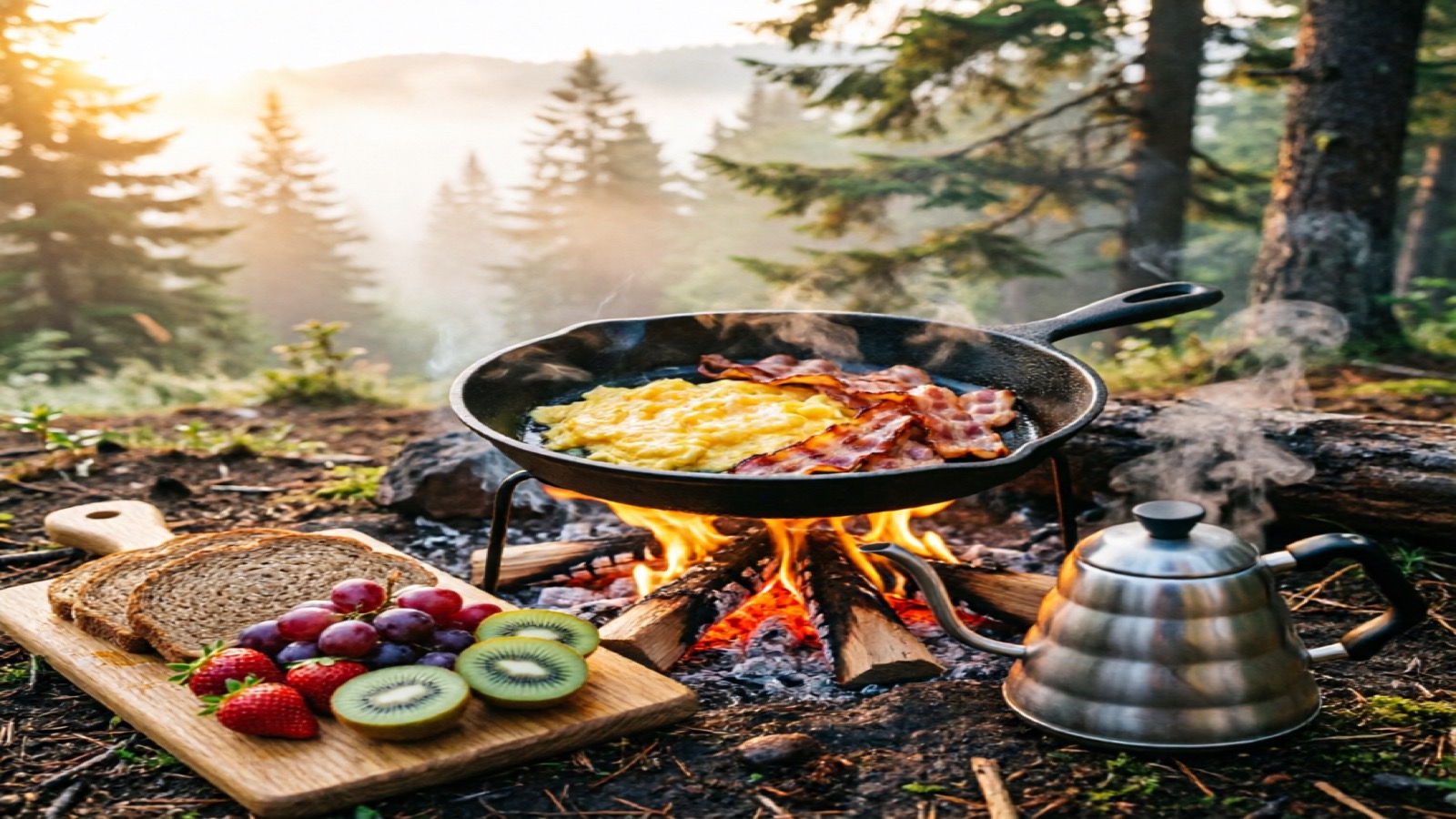
- Breakfast: scrambled eggs with pre-chopped peppers and cheese, toast or tortillas
- Lunch: turkey and cheese wraps with lettuce, mustard, and a piece of fruit
- Dinner: grilled burgers with pre-sliced onions and corn on the cob (hero meal)
- Snacks: trail mix, granola bars, apples
Day 2 — Transition Day
- Breakfast: instant oatmeal with dried fruit and nuts, coffee
- Lunch: peanut butter and banana wraps, pretzels
- Dinner: foil packet hobo dinners — pre-assembled at home, ground beef + potatoes + carrots + onion, 20 min on coals (hero meal)
- Snacks: jerky, crackers and cheese
Day 3 — Shelf-Stable Day
- Breakfast: pre-made breakfast burritos (frozen at home, heated on stove for 5 min)
- Lunch: canned chili with crackers — heat on stove or eat cold
- Dinner: one-pot mac and cheese with pre-cooked bacon bits — minimal effort on pack-out day
- Snacks: leftover trail mix, granola bars
Grocery List for This Camping Meal Plan
Produce: 2 bell peppers, 1 onion, 2 potatoes, 3 carrots, lettuce, 2 bananas, 2 apples, corn on the cob
Meat/dairy: 1 lb ground beef, 4 burger patties, 1 pack turkey deli slices, 1 pack cheddar, 8 eggs, butter
Pantry: tortillas, bread, peanut butter, instant oatmeal, pancake mix, mac and cheese box, canned chili, trail mix, granola bars, jerky, crackers, salt, pepper, oil
Cooler supplies: 2 bags block ice, 1 bag cubed ice
Non-food: aluminum foil (heavy-duty), ziplock bags, paper towels, trash bags, dish soap, scrub sponge
Camping Food Packing List
A complete camping food checklist — print this and check it off before every trip. Having the right gear makes your camping meal plan easier to execute.
Cooking Equipment
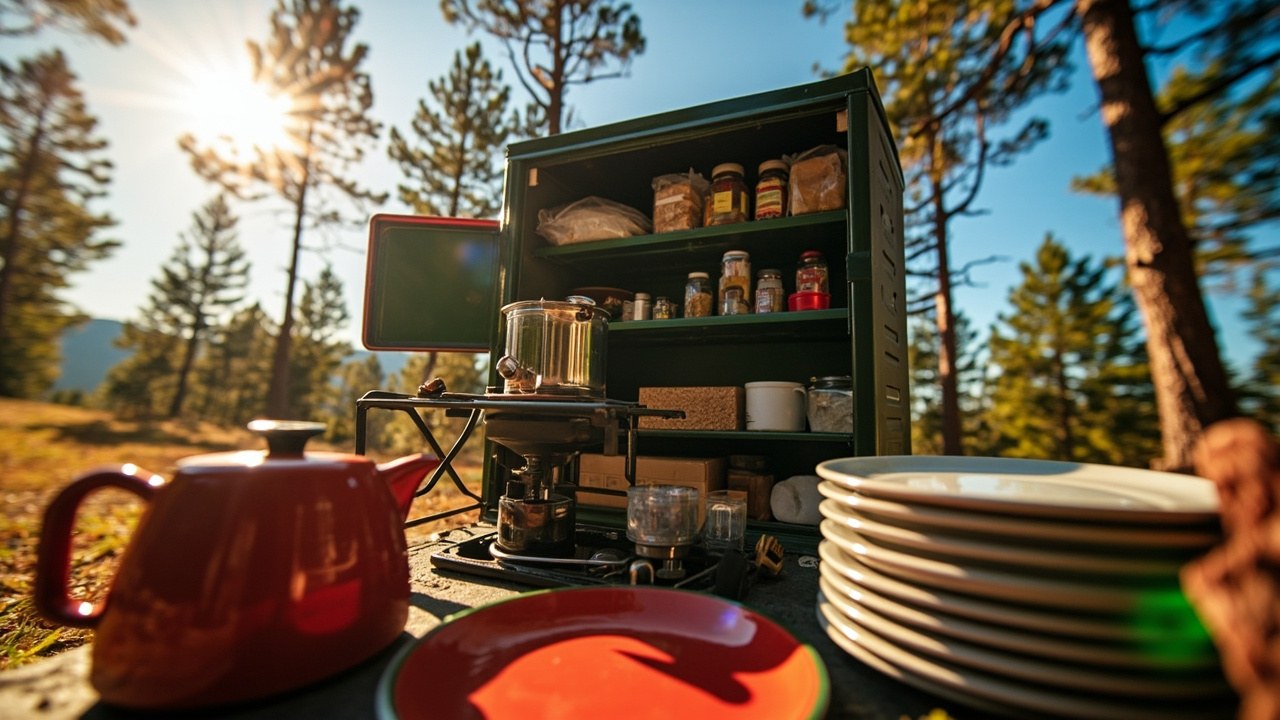
A full cookware set eliminates the guesswork. The THTYBROS 17-piece Camping Cookware Kit includes a pot, pan, kettle, and utensils for two people in one nested set. Cooking for a group? The STANLEY Wildfare Core 26-piece Camp Kitchen covers a 4-quart pot, fry pan, and four full table settings — everything but the stove. For backpackers counting ounces, the Alocs Aluminum Cookware Set is lighter and more compact than any kit with stainless steel components.
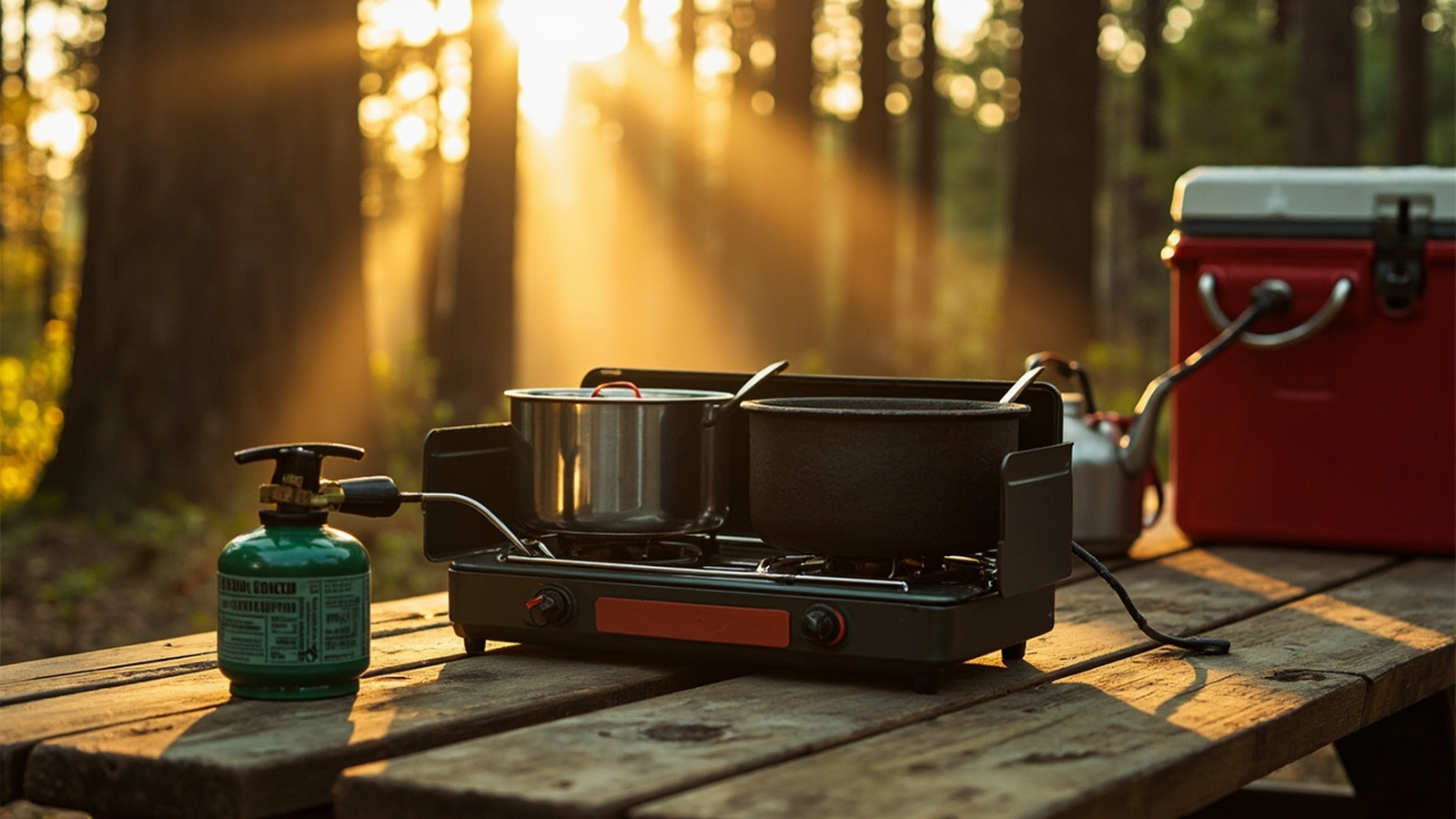
- Camp stove + fuel (propane cylinder or butane canister)
- One pot + one pan (non-stick)
- Cooking utensils: spatula, tongs, long-handled spoon, sharp knife
- Cutting board
- Can opener
- Measuring cup and measuring spoons
- Pot holders or heat-resistant gloves
- Lighter or matches (backup ignition)
Food Storage and Prep
- Cooler with block ice
- Ziplock bags (quart and gallon) — for prep, storage, leftovers
- Food storage containers with lids
- Aluminum foil (heavy-duty) — for foil packets, wrapping, grill lining
- Plastic wrap or beeswax wrap
- Trash bags — pack out everything
Condiments and Seasonings
Pack small amounts, not full bottles:
- Salt and pepper
- Cooking oil (small bottle)
- Hot sauce, ketchup, mustard (as needed)
- Spice blends you’ll actually use (garlic powder, chili powder, cumin)
Cleanup
- Biodegradable dish soap
- Scrub sponge or steel wool
- Paper towels
- Wash basin or large container
- Trash bags (always bring more than you think)
Camping Meal Plan Without a Cooler
A no-cooler camping meal plan requires a different strategy. Whether you’re backpacking or just minimalist camping, this camping meal plan approach keeps you fed without refrigeration.
The No-Cooler Camping Meal Plan Strategy
- Focus on shelf-stable proteins: canned chicken, canned tuna, beef jerky, pepperoni sticks, nuts, peanut butter
- Dehydrated and freeze-dried meals for dinner — lightweight and last for months
- Hard cheeses (cheddar, parmesan) keep for 2–3 days without refrigeration — softer cheeses spoil faster
- Pre-cooked rice and pasta packets — just add hot water
- Dried fruits and vegetables — raisins, cranberries, dried apricots, sun-dried tomatoes
Sample No-Cooler Camping Meal Plan Day
- Breakfast: instant oatmeal with dried fruit + peanut butter on tortilla
- Lunch: canned chicken wrap with hard cheese and dried cranberries
- Snacks: jerky, nuts, granola bars, apples (last 2–3 days without fridge)
- Dinner: freeze-dried meal or one-pot pasta with canned tomatoes and pepperoni
No-Cooler Rules
- No raw meat — canned, cured, or dehydrated only
- Eat fresh produce first (Day 1–2): apples, carrots, bell peppers last longer than leafy greens
- Pack calorie-dense foods — nuts, cheese, and jerky go further than crackers
Frequently Asked Questions
How do I plan meals for a week of camping?
Scale the 3-day camping meal plan template: eat perishables Days 1–2, transition foods Days 3–4, shelf-stable Days 5–7. A week-long camping meal plan needs ice replenishment on Day 3–4 if possible. Plan 2 hero meals and keep the rest simple. For a full week: bring a second cooler or plan a grocery run mid-trip. Prep everything possible at home — the more you pre-cook, the less cooking you do at camp.
What food should I bring for a 3-day camping trip?
Day 1: perishables first — burgers, eggs, fresh vegetables, deli meat, cheese. Day 2: transition — foil packets with pre-marinated meat, pre-cooked rice, hardier vegetables. Day 3: shelf-stable — canned chili, mac and cheese, wraps with peanut butter, instant oatmeal. Bring more ice than you think, and eat from the cooler in order of spoilage risk.
How do you keep food cold camping without a fridge?
Use a quality cooler with block ice (lasts 2–3× longer than cubes). Layer: raw meat on bottom (coldest), dairy in middle, drinks on top. Keep cooler in shade, cover with a blanket, open only when necessary. Pre-freeze items like meat and pre-cooked meals — they'll thaw slowly and keep other food cold. For trips longer than 2 days: plan to replenish ice.
What are easy meals to prep before camping?
The best prep-ahead camping meals: marinated proteins in ziplock bags (freeze them), pre-chopped vegetables in labeled bags, pre-cooked rice and pasta (reheat in 5 min), pre-assembled foil packets (wrap and refrigerate), pre-mixed pancake batter in a squeeze bottle, and frozen breakfast burritos. Prep at home = 10-minute camp cooking.
How much food should I pack per person per day camping?
Plan 2 lbs (900g) of food per person per day — roughly 2,500–3,000 calories for active camping. Break down: breakfast ~600 cal, lunch ~700 cal, dinner ~800–1,000 cal, snacks ~400–600 cal. Adjust up for hiking-intensive trips and down for relaxed car camping. It's better to have one extra day of food than to run short.
What is the best way to pack food for camping?
Pack by day in separate bags (Day 1, Day 2, Day 3) — this prevents digging through everything and helps you track what you've eaten. Keep a 'first meal' bag easily accessible for when you arrive tired and hungry. Pack cooler items layered by temperature sensitivity. Keep non-cooler dry goods in a separate bin. Label everything — 'ground beef Day 1 dinner' prevents confusion.
Can you meal prep for camping trips?
Absolutely — and you should. The 80/20 rule: do 80% of the work at home, 20% at camp. Pre-chop veggies, pre-cook grains and proteins, marinate and freeze meats, assemble foil packets, mix dry ingredients. Everything that can be done at home should be done at home. Pre-prep turns a 45-minute camp dinner into a 10-minute reheat.
What camping food doesn't need to be refrigerated?
Proteins: canned chicken/tuna, beef jerky, pepperoni, hard salami, nuts, peanut butter. Grains: instant oatmeal, pasta, rice packets, crackers, tortillas. Dairy: hard cheeses (cheddar, parmesan — last 2–3 days unrefrigerated), butter. Produce: apples, oranges, carrots, bell peppers (last 2–5 days). Avoid without a cooler: raw meat, soft cheese, milk, yogurt, leafy greens, berries.